
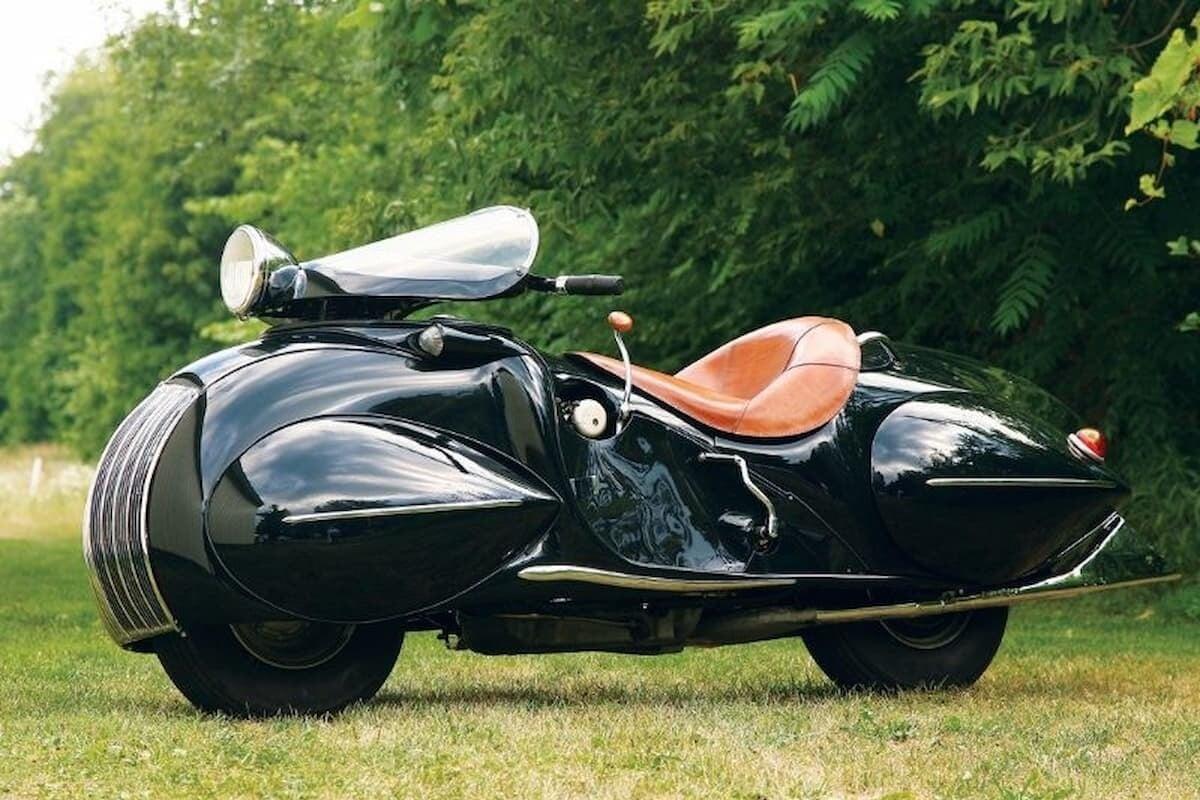

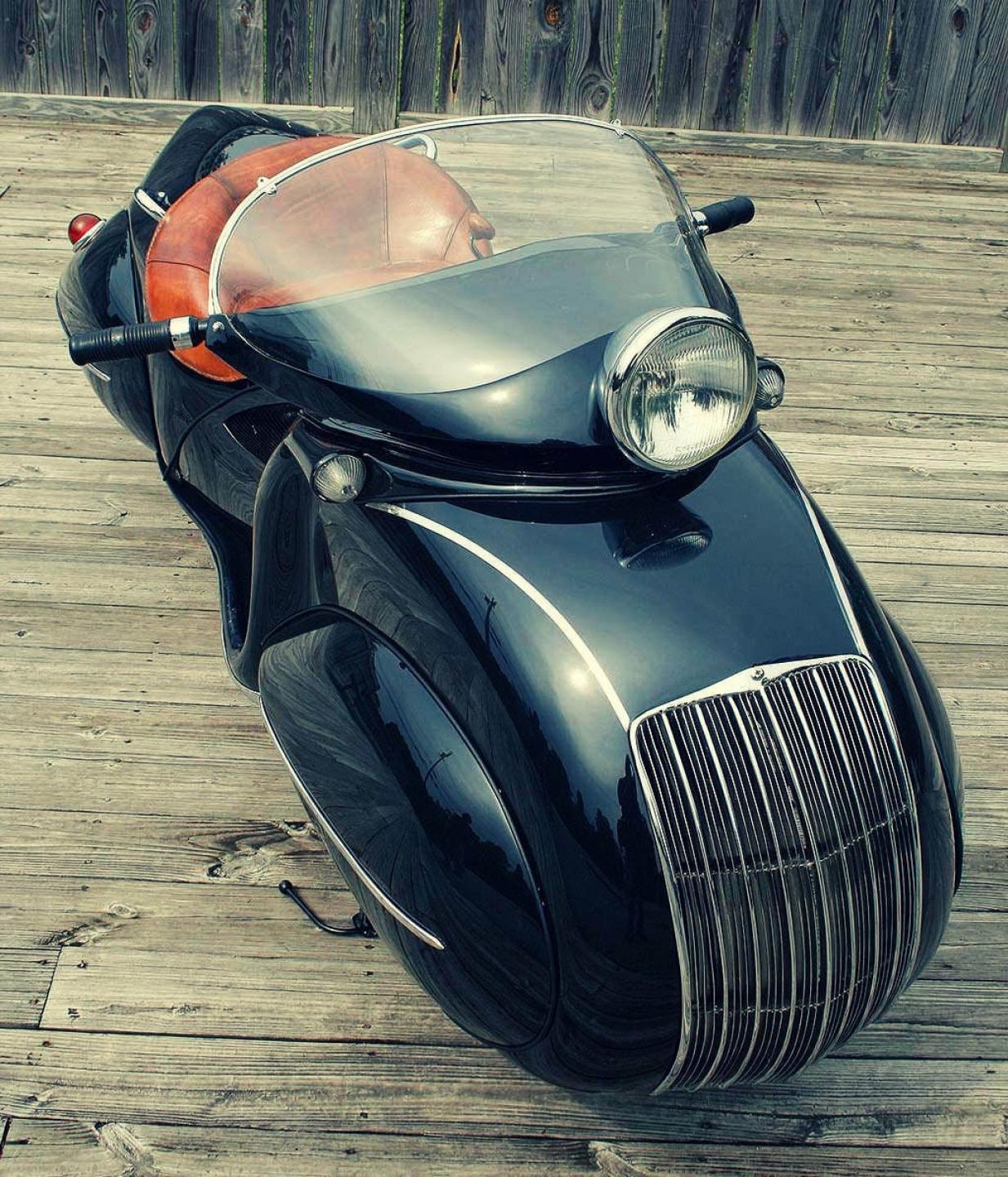
At first glance, the Henderson KJ Streamline 2 looks unlike anything else from the 1930s.
A Glimpse Into the Streamlined Vision
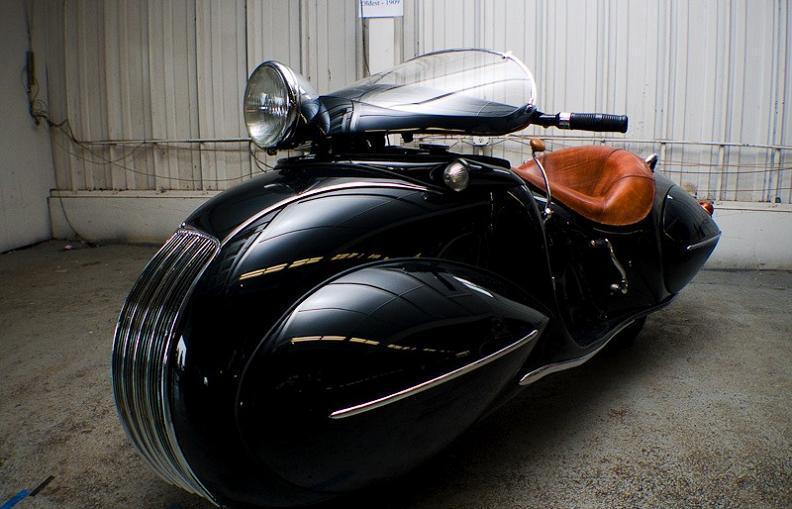
Its defining feature is the full body fairing, designed to reduce air resistance, a concept far ahead of its time.
Key visual elements:
- Enclosed front and rear wheels
- Smooth, flowing body panels
- Integrated fenders and side skirts
- Minimal exposed mechanical components
This wasn’t just about looks, it was about speed, efficiency, and innovation.
Engineering and Performance
Underneath its futuristic shell, the Streamline 2 was based on the Henderson KJ platform, known for reliability and smooth performance.
Technical highlights:
- Engine: Inline four-cylinder (a signature of Henderson motorcycles)
- Displacement: Approximately 1300cc
- Cooling system: Air-cooled
- Top speed: Estimated 100 mph (very impressive for the era)
The inline-four engine delivered smooth and consistent power, making the ride more refined and enjoyable. It also produced strong torque, which was particularly beneficial for long-distance travel, allowing the motorcycle to maintain performance over extended journeys. Additionally, compared to single- or twin-cylinder engines, it significantly reduced vibration, resulting in greater comfort for the rider.
Why the Streamlining Mattered
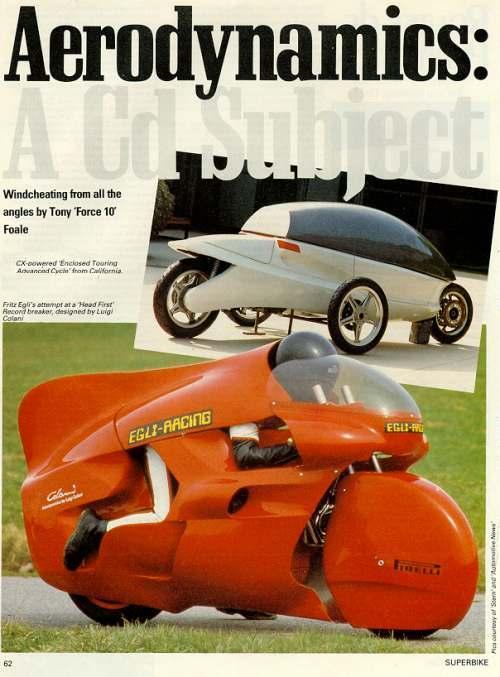
The Streamline 2 wasn’t just a design experiment, it represented a deeper understanding of aerodynamics in transportation.
Benefits of the streamlined design:
- Reduced drag at high speeds
- Improved fuel efficiency
- Enhanced rider protection from wind
- Greater stability
At a time when most motorcycles were upright and exposed, this design was revolutionary.
Historical Context
The late 1920s and early 1930s saw a growing fascination with streamlining across industries, from trains to automobiles. The Henderson KJ Streamline 2 was part of this broader movement.
However, it faced challenges:
- High production costs
- Complex manufacturing
- Market resistance to radical designs
As a result, it never achieved mass production successб but its influence endured.
Legacy and Influence
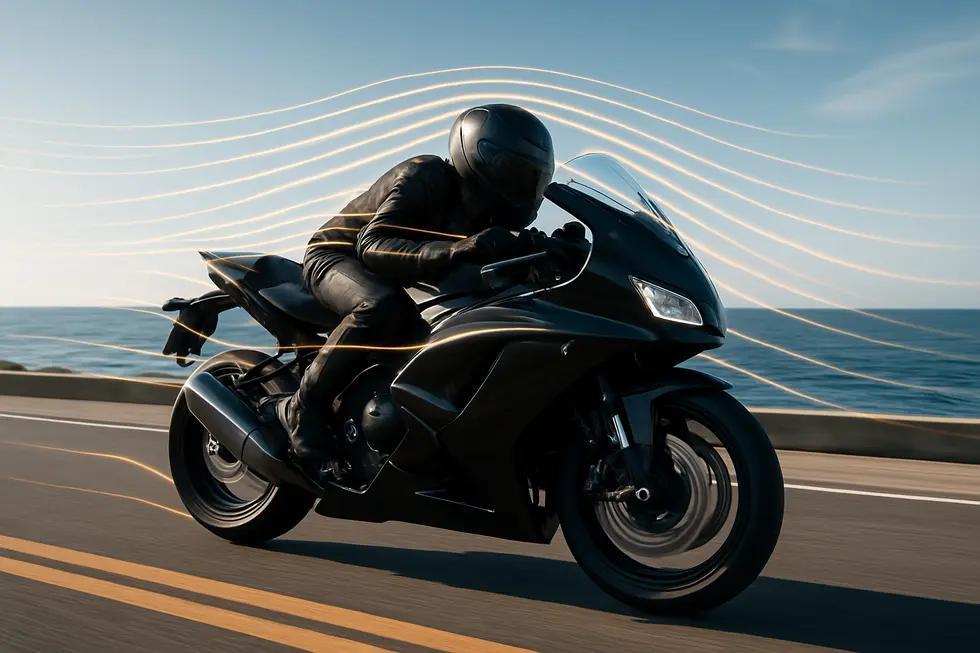
While the Streamline 2 itself remained rare, its ideas live on in modern motorcycles.
Lasting impact
The lasting impact of the Henderson KJ Streamline 2 can be seen in several key areas of motorcycle design and innovation. It served as an early inspiration for the development of full fairings, which are now a defining feature in modern sport and touring motorcycles. Additionally, it demonstrated a forward-thinking approach through its early adoption of aerodynamic efficiency principles, long before such considerations became standard in vehicle engineering. Its bold and unconventional design also influenced future concept motorcycles and custom builds, encouraging designers to push boundaries and explore more experimental forms.
Today’s high-performance motorcycles, with wind tunnels, CFD simulations, and sculpted fairings, owe something to pioneers like this.
Collector Value and Rarity
The Henderson KJ Streamline 2 is extremely rare, making it a prized piece among vintage motorcycle collectors.
Why collectors value it:
- Historical significance
- Unique design
- Limited production numbers
- Early example of experimental engineering
When one appears at auction or exhibition, it attracts global attention.
Conclusion
The Henderson KJ Streamline 2 (1930) wasn’t just a motorcycle, it was a bold statement about the future of mobility. Combining advanced engineering with radical design, it challenged conventions and set the stage for decades of innovation.
Even today, it remains a symbol of what happens when imagination meets engineering, a true icon in the evolution of motorcycles.