

It’s important to understand: all the problems listed below are progressive. They worsen as components wear and mileage increases. You might not notice them right away, or worse, unconsciously adapt to the changes until the situation becomes genuinely unpleasant. The good news? Fixing these issues can make your motorcycle feel completely transformed.
Worn Tires
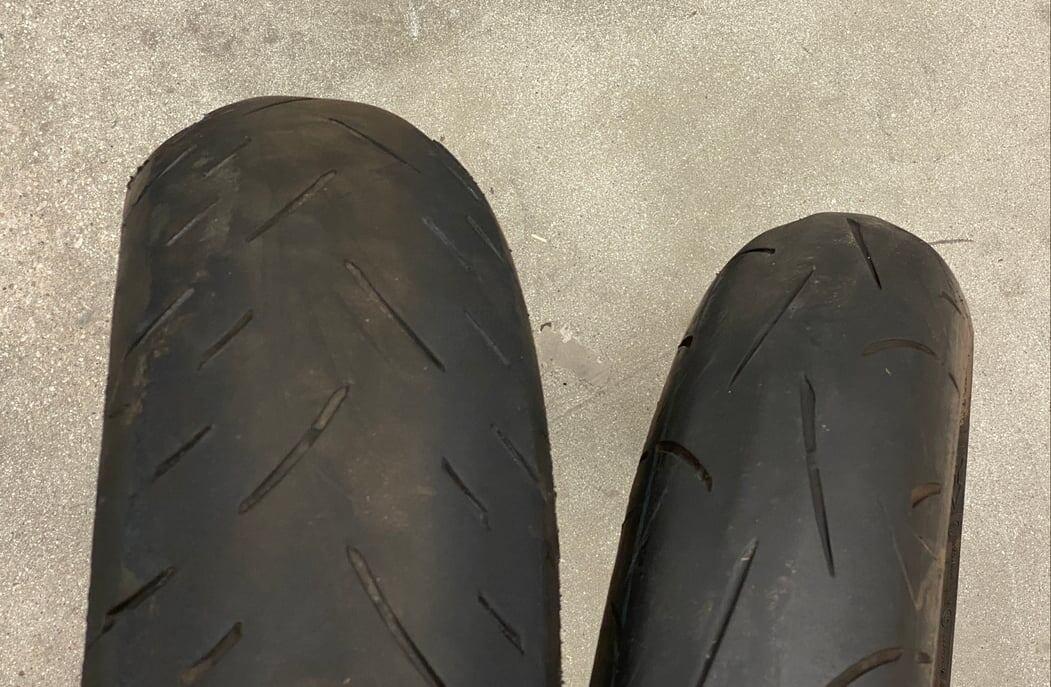
Tire wear may seem like an obvious warning sign, but many riders underestimate how much a “square” rear tire or a pointed (“triangular”) front tire profile affects handling and stability.
Front tire wear is especially tricky. It can look minor while significantly altering how the bike behaves. If the shoulder areas are worn down, creating a triangular profile, or if you notice “cupping” (uneven wear where one side of the tread grooves is more worn), the handlebars may feel heavy, or on the contrary, vague and lacking feedback. A common symptom of uneven wear is handlebar vibration or wobble when you loosen your grip.
Tire wear is a silent killer of handling. The profile changes gradually over thousands of kilometers, and riders simply adapt. That’s why it’s crucial to regularly check tire pressure and condition. Installing new tires with a proper rounded profile often feels like switching to a completely different motorcycle.
Notchy Steering Head Bearings
You may have experienced a strange sensation when initiating a turn, as if someone gently nudges the bike from the side. It’s subtle but unsettling and undermines confidence.
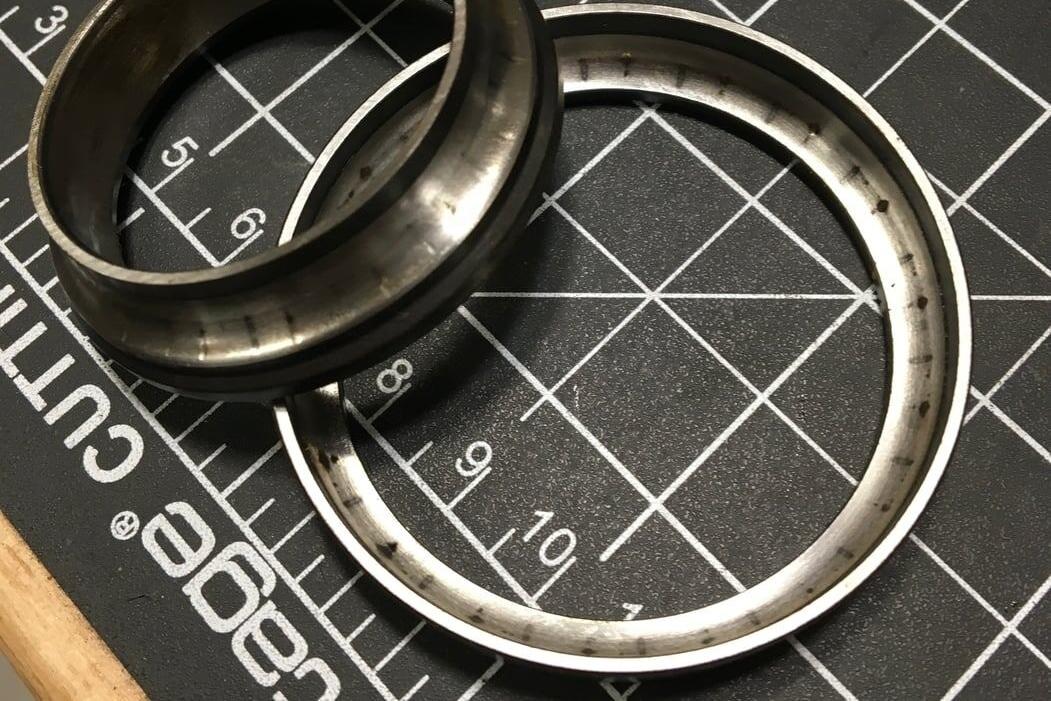
A common cause is overtightened, dry, or worn steering head bearings. If the bearings connecting the fork to the frame don’t rotate freely, part of the frame twists during steering input, creating that odd feeling.
Like tire wear, bearing issues develop slowly, often over tens of thousands of kilometers.
Wheel bearings also wear out. Play in the axle-hub assembly can significantly affect handling. It’s a good idea to check them during every tire change: insert a finger into the inner race, rotate it, and try to wiggle it. Rotation should be smooth, with no radial or axial play.
Checking steering head bearings
Place the motorcycle on a center or rear stand and carefully lift the front wheel. Hold the fork near the axle and gently rock it, there should be no play. Then turn the handlebars from lock to lock. If movement feels stiff, there’s a “notch” in the center, or the bars return to center on their own, the bearings need attention.
Note: If the handlebars tend to turn by themselves, it could also be due to tight cables or wiring, not necessarily the bearings.
Excessive Throttle Free Play
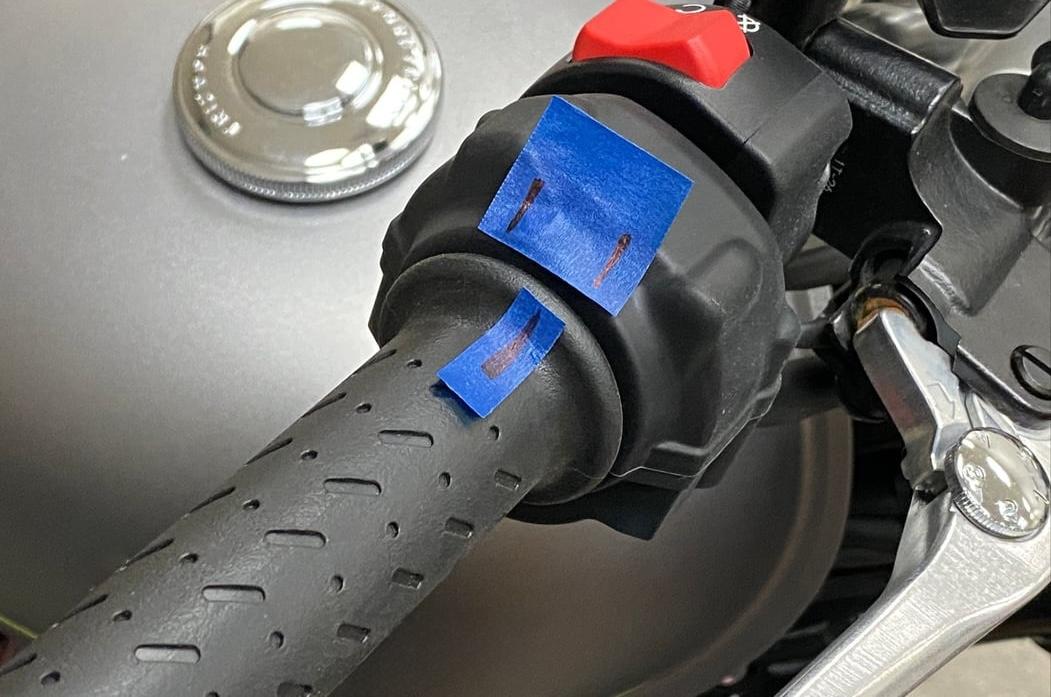
Too much slack in the throttle is one of the most annoying small issues.
If free play is excessive, there’s a delay between twisting the throttle and engine response. This makes the bike unpleasant to control, and the engine may feel jerky or faulty. On track days, riders often suspect fuel injection problems when the real issue is simply loose throttle cables.
Over time, cables stretch and wear within their housings, increasing slack. Fortunately, adjustment usually takes just a few minutes.
Drivetrain Play
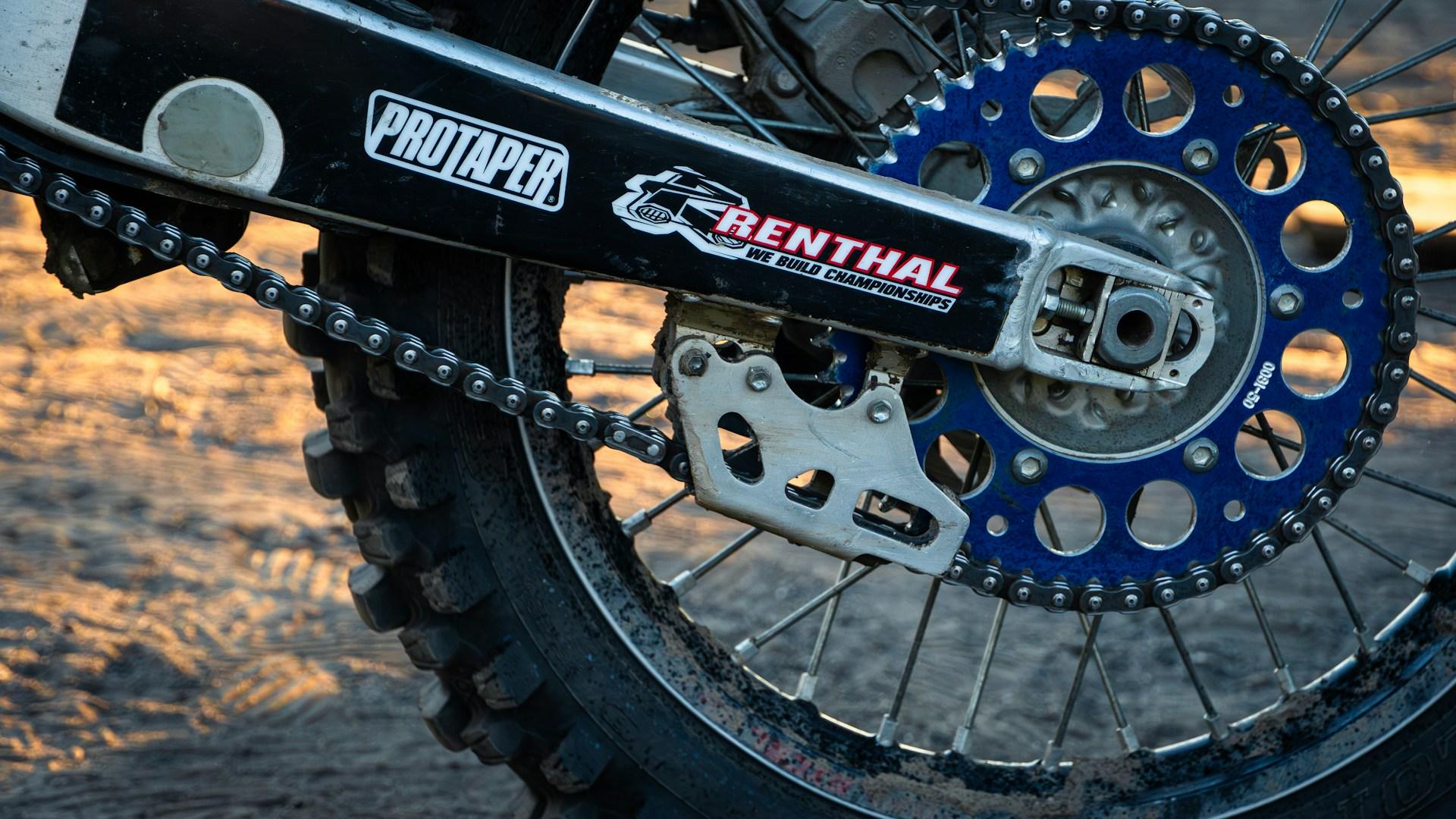
A heavily worn chain, sprockets, or rear hub dampers can create a similar sensation to excessive throttle slack, power delivery becomes abrupt and uneven.
A loose chain isn’t just a visual issue. The accumulated wear between pins and bushings creates noticeable longitudinal play. This results in jerks during acceleration or when transitioning to engine braking.
Worn hub dampers add even more play. Altogether, drivetrain slack makes throttle input and roll-off feel harsher and less controlled.
Suspension Leaks
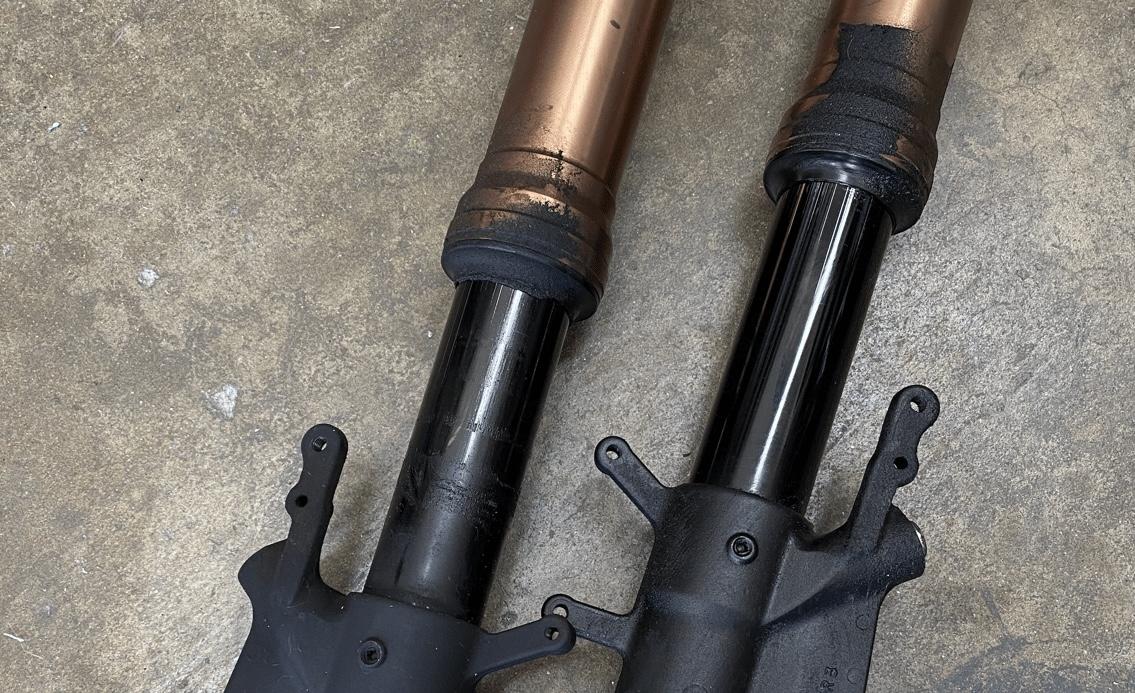
A small oil leak from the engine might just need monitoring. But if your fork seals or shock absorber are leaking, repairs shouldn’t be delayed.
The oil volume in suspension components is relatively small. Fluid loss reduces damping, causing the motorcycle to bounce, lose stability, and feel less “planted.” Because this happens gradually, it’s easy to overlook.
Additionally, leaking oil can contaminate brake discs and pads, while running suspension components “dry” accelerates wear of internal parts.
Interesting Facts
- Tire shape matters more than tread depth: Even with legal tread remaining, a distorted tire profile can dramatically worsened motorcycle’s handling.
- Most riders adapt without realizing it: Studies and rider feedback show that people subconsciously adjust riding style to compensate for mechanical wear.
- A fresh set of tires can cut lap times instantly: On track, simply replacing worn tires often improves lap times more than engine upgrades.
- Steering head bearings can last over 100,000 km, but only if properly maintained and lubricated.
- Chain wear affects fuel efficiency: A worn drivetrain not only impacts smoothness but also slightly reduces power transfer efficiency.
Final Thoughts
These may seem like minor issues, but they can significantly affect how your motorcycle behaves. If you care about how your bike corners, absorbs bumps, and feels on the road, keep these components in check. Handling rarely deteriorates suddenly, it usually fades away gradually.
If you notice any irregularities or aren’t confident in your bike’s condition, don’t delay diagnosis. Visiting an authorized service center can help identify and fix problems before they become serious.