


Motorcycle oils began to diverge from automotive oils in the 1980s, when the car industry took a path that turned out to be harmful for motorcycles. In particular, friction modifiers added to improve fuel economy often caused clutch slip during acceleration.
That’s usually where the explanation ends: “the clutch will slip”. But clutch slip is far from guaranteed, and it’s only the tip of the iceberg. There are other reasons why automotive oils are poorly suited for motorcycles. First and foremost, motorcycle engines operate at much higher RPMs and higher temperatures, and in most designs the same oil lubricates the engine, the clutch, and the gearbox.
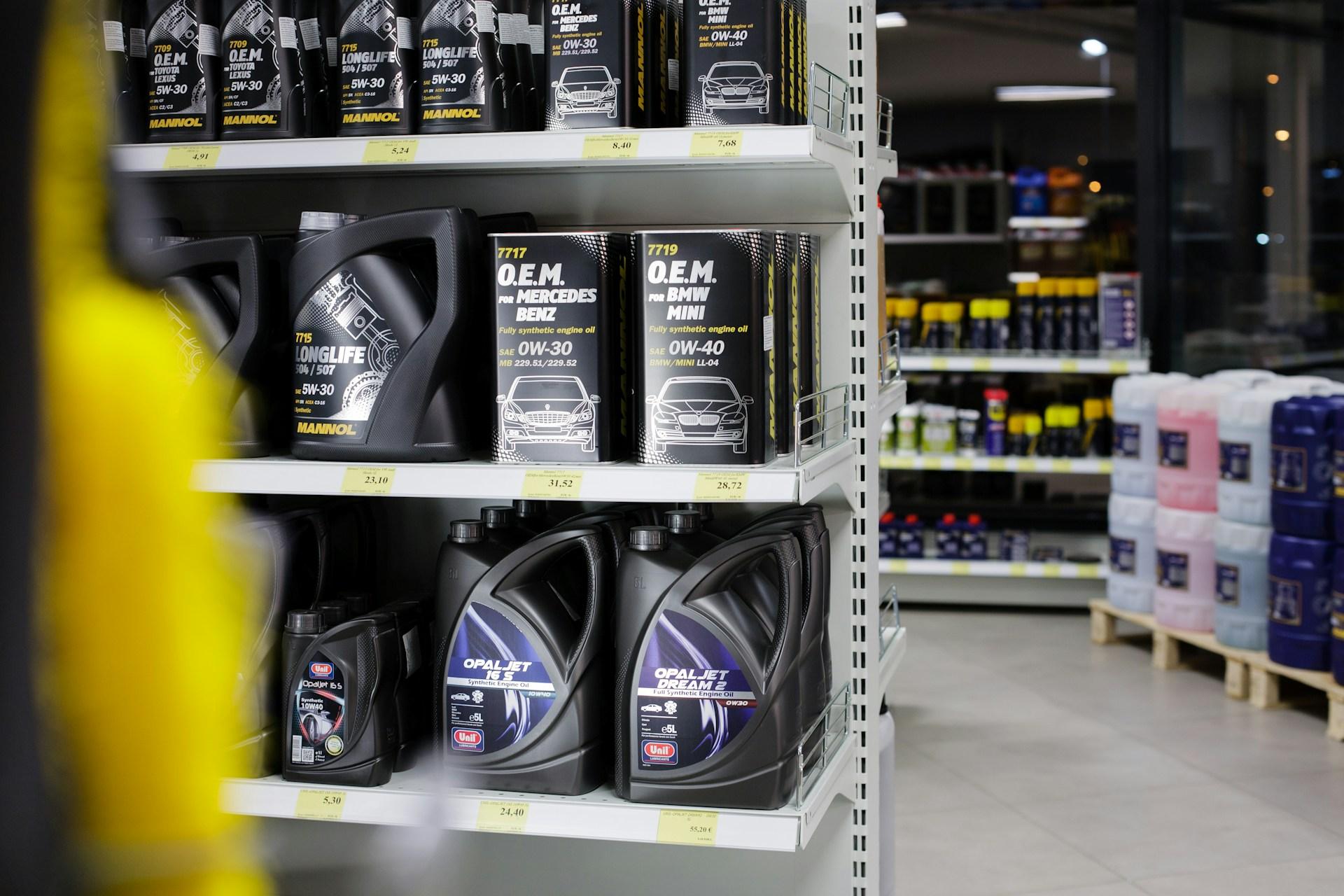
And the gearbox literally grinds the additive package “into flour”. Polymer thickeners, or viscosity index improvers (VIIs), suffer the most. These polymer compounds are what allow modern multigrade oils to behave like thicker oils when heated. This is critically important: the oil must flow easily during a cold start, yet at operating temperature retain enough viscosity to stay on parts and prevent wear.
Viscosity modifiers come in different types. Some provide excellent viscosity stability but are less resistant to mechanical breakdown; others are more durable but less effective. This characteristic is called shear stability, the ability to maintain viscosity under mechanical and thermal stress. Motorcycle oils typically use stronger modifiers, and in greater quantities. In cars, where the engine oil is isolated, smaller amounts of more “delicate” compounds are sufficient. As a result, if you pour car oil into a motorcycle, it may thin out too quickly, leading to accelerated engine wear.
In addition, motorcycle oil is designed to work with a wet clutch: it must provide the correct coefficient of friction and effectively bind the dust and particles produced as the friction plates wear. To keep this contamination from settling out and depositing inside the engine, motorcycle oils contain a higher level of dispersant additives. High-load additives, anti-wear components, and other elements are also far more critical for motorcycle oil than for automotive oil.
The conclusion is obvious: using oil specifically designed for motorcycles is the only correct choice. But how can you tell whether a particular product is suitable for a high-revving, hot-running motorcycle engine? And what should you do if, while on the road, you suddenly discover that the oil level is at the minimum and there’s no “proper” oil available?

The first question is answered by an entire organization dedicated to evaluating motorcycle oils. The Japanese Automotive Standards Organization (JASO) sets special requirements for wet clutch performance and resistance to increased loads. Oils that meet these standards are labeled MA, MA1, or MA2. Your owner’s manual specifies which class your motorcycle requires, but in an emergency, any of them will do.
Now about those “emergencies”. If you’re on a trip and notice that the oil level has dropped, you must top it up, even if you don’t have JASO-rated oil on hand.
An automotive oil without the Energy Conserving (EC) designation and with a suitable viscosity will work. But it’s important to understand that it isn’t durable enough for long-term use in a motorcycle: it thins and degrades more quickly. This won’t happen over 100-200 km, so temporary use is acceptable. However, as soon as you get back, replace it with a quality motorcycle oil as soon as possible.