
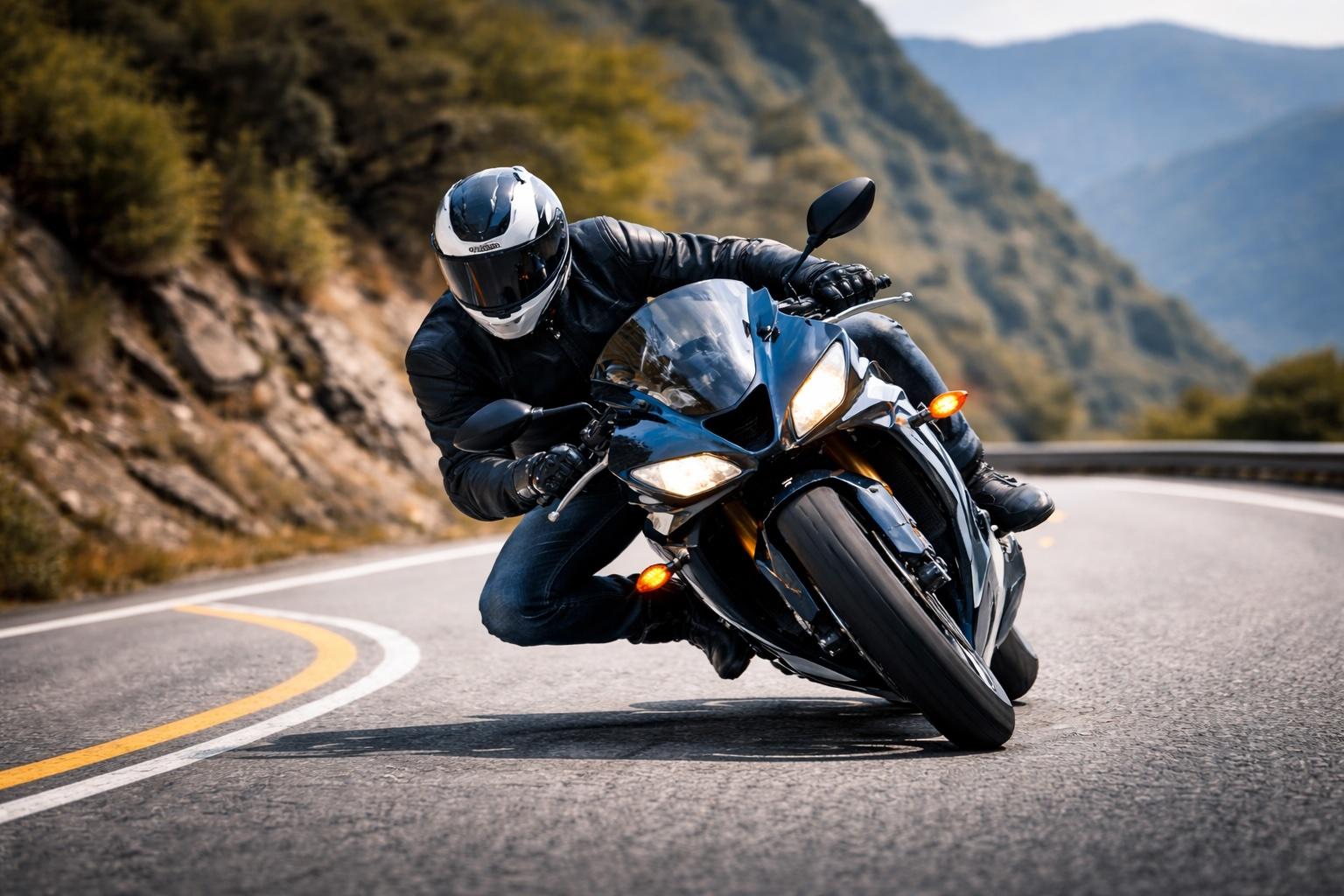

Let’s break it down, clearly, accurately, and without myth.
What Is Counter-Steering?
At walking speed, motorcycles behave intuitively. If you turn the handlebars to the right, the bike goes right. This direct steering works only at very low speeds, generally below 5-6 mph.
Once you go faster than that, something interesting happens.
To turn right, you briefly steer left.
To turn left, you briefly steer right.
This input causes the motorcycle to lean in the desired direction, and once leaned, the bike naturally follows the turn. This technique, whether intentional or unconscious, is called counter-steering, and it is the only way a two-wheeled motorcycle can turn at speed.
Why Counter-Steering Feels So Natural
Riders rarely feel confused by this “opposite” input because it doesn’t feel opposite at all. Instead of thinking about pulling one handlebar, most riders instinctively push the grip on the side they want to turn toward.
Push right → bike leans right → bike turns right.
The feedback from the handlebars reinforces this behavior, making counter-steering feel effortless. Over time, riders simply associate the push with the turn, without needing to think about physics.
The Gyroscope Myth (And the Truth)
Many explanations of counter-steering focus on gyroscopic precession, the tendency of a spinning wheel to respond 90 degrees away from an applied force. While this effect exists, it is often misunderstood.
Yes, a spinning front wheel does exhibit gyroscopic behavior. But gyroscopic precession does not cause counter-steering. Instead, it merely smooths and assists the process.
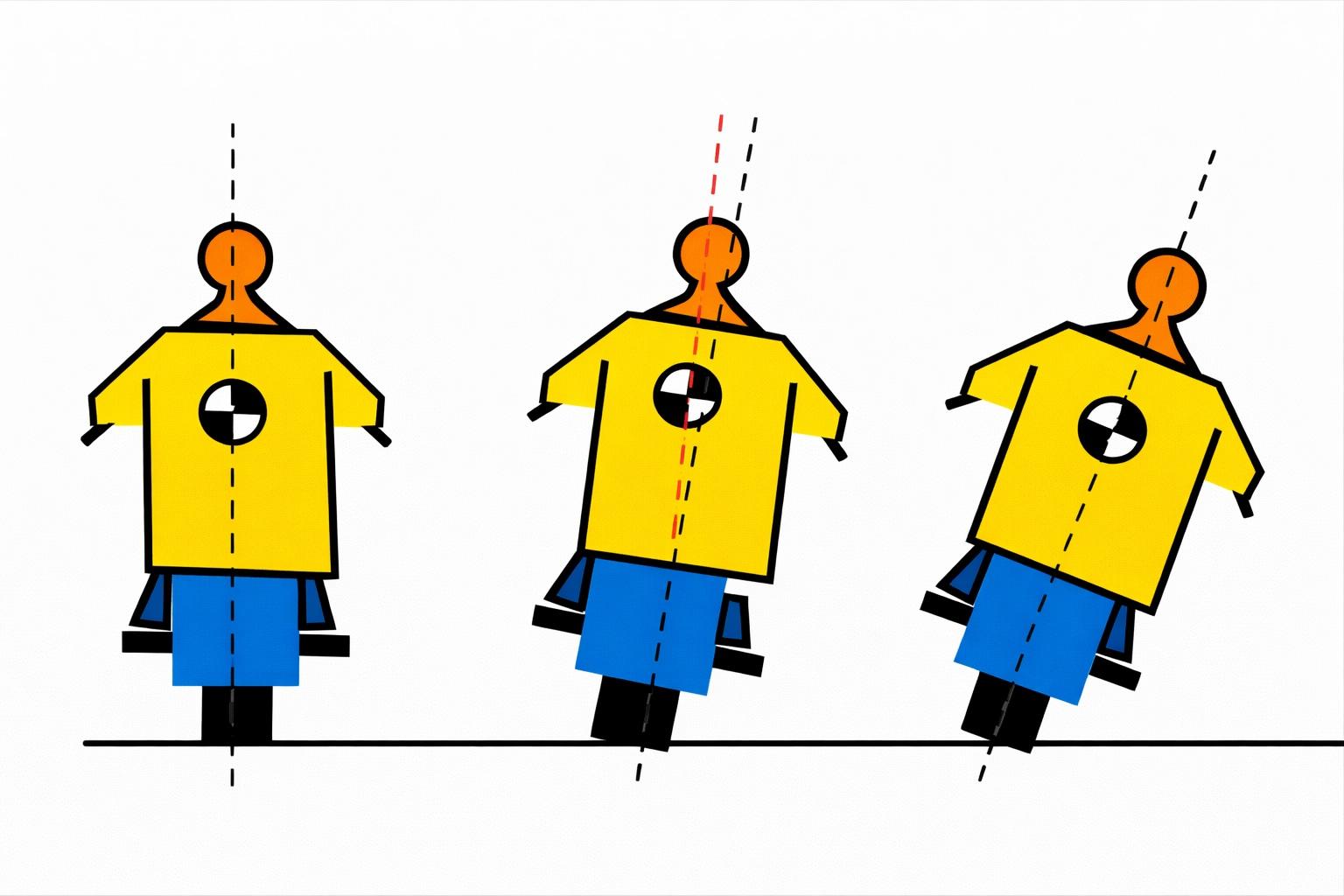
The real initiator of counter-steering is steering geometry and centrifugal force, not gyroscopic magic.
Steering Geometry: The Real Key
Two design elements make motorcycles behave the way they do:
Rake
Rake is the angle at which the front forks tilt back from vertical (typically around 25-30 degrees). This angle causes the front wheel to naturally turn into a lean.
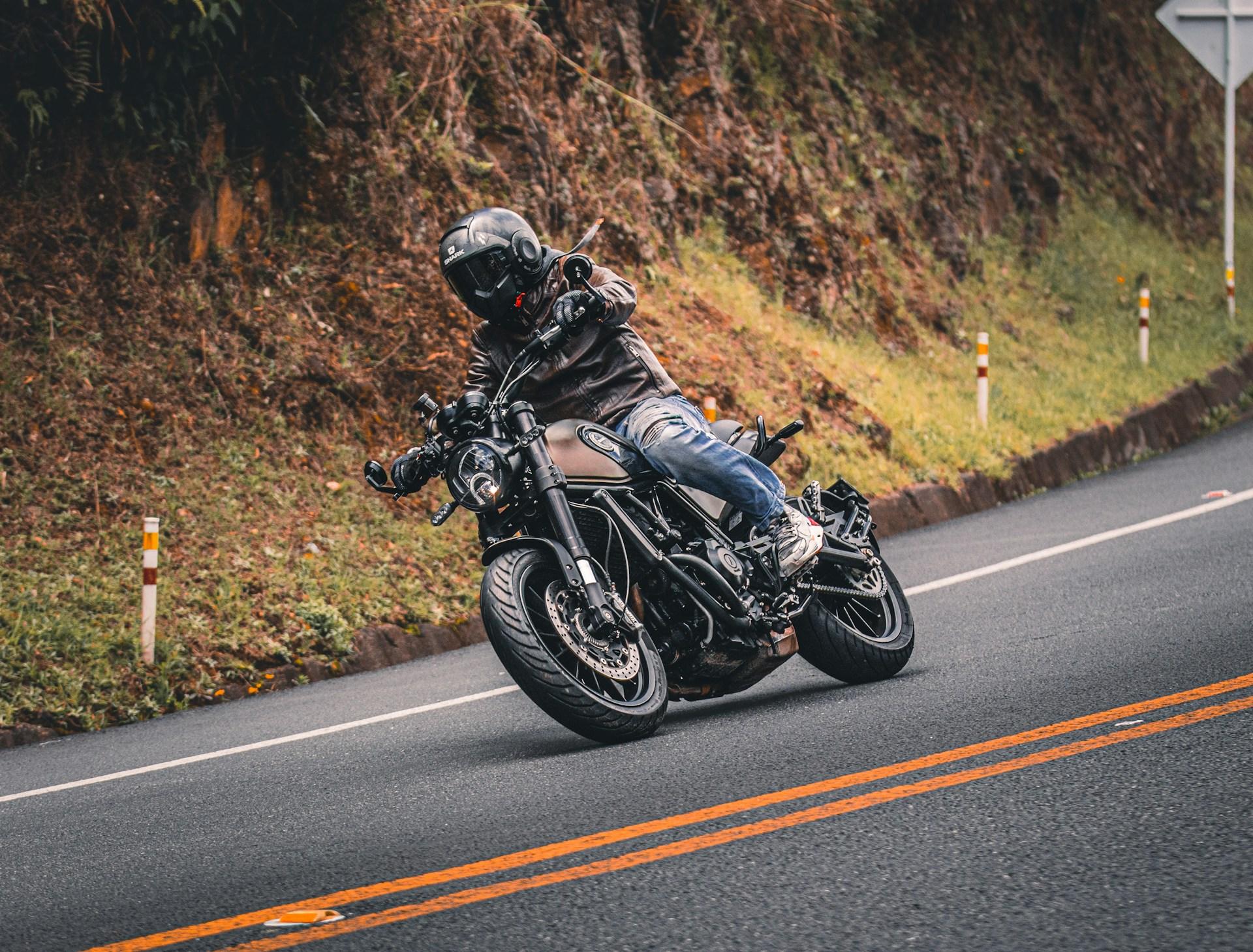
You can even observe this while stationary:
Turn the handlebars slightly, and the bike leans in the opposite direction.
Trail
Trail is the distance between where the steering axis hits the ground and where the tire’s contact patch touches the ground.
Longer trail = more high-speed stability
Shorter trail = quicker steering response
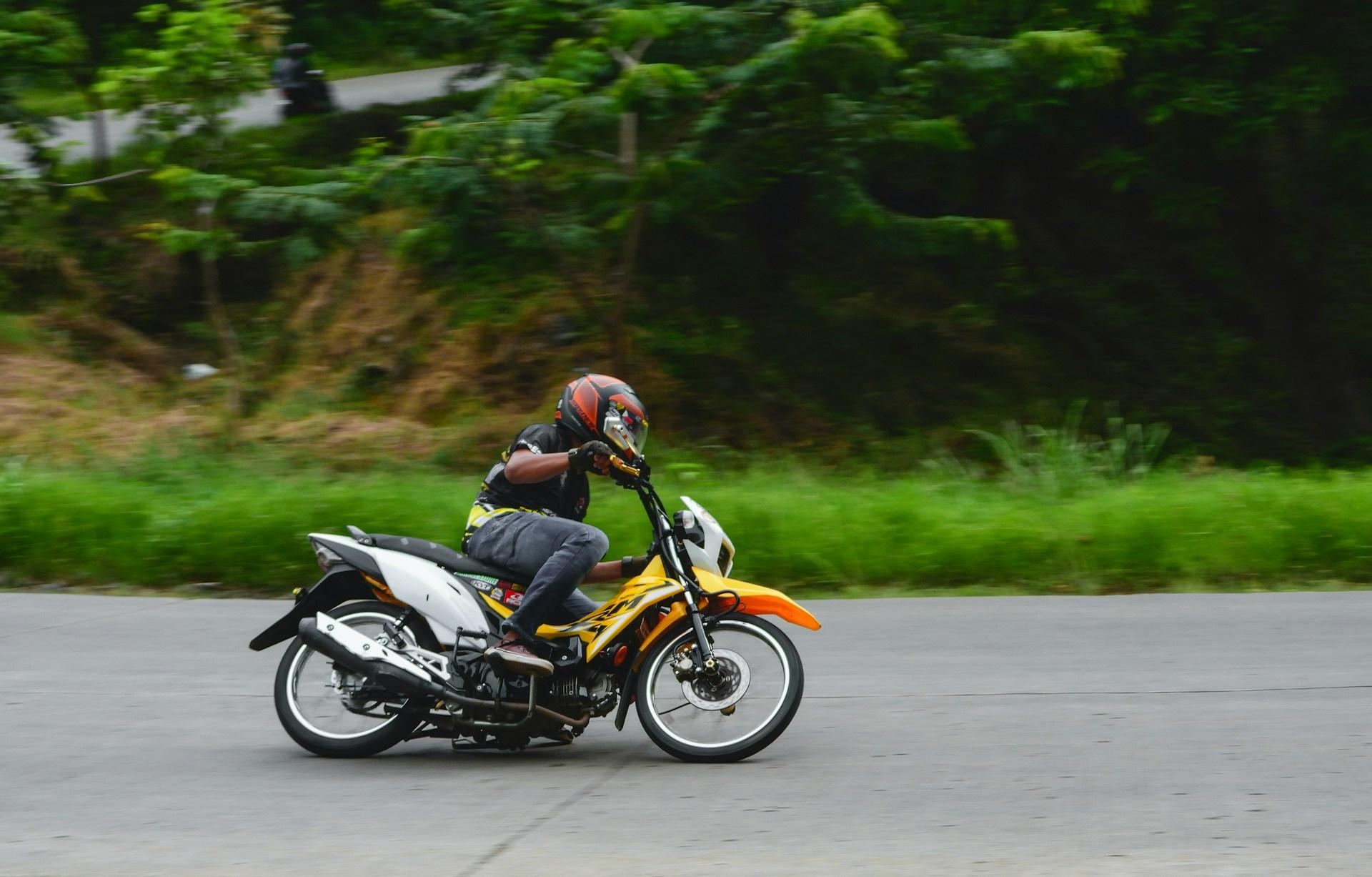
Trail is influenced by:
- Rake angle
- Fork offset
- Tire radius
This geometry is why motorcycles self-correct and naturally seek a straight path when left alone.
Why the Bike Leans First, Then Turns
When you apply a counter-steering input, the front wheel momentarily moves out from under the bike. This causes the motorcycle to lean.
Once leaned, two forces immediately begin turning the wheel into the direction of the lean:
Gravity + Rake Geometry
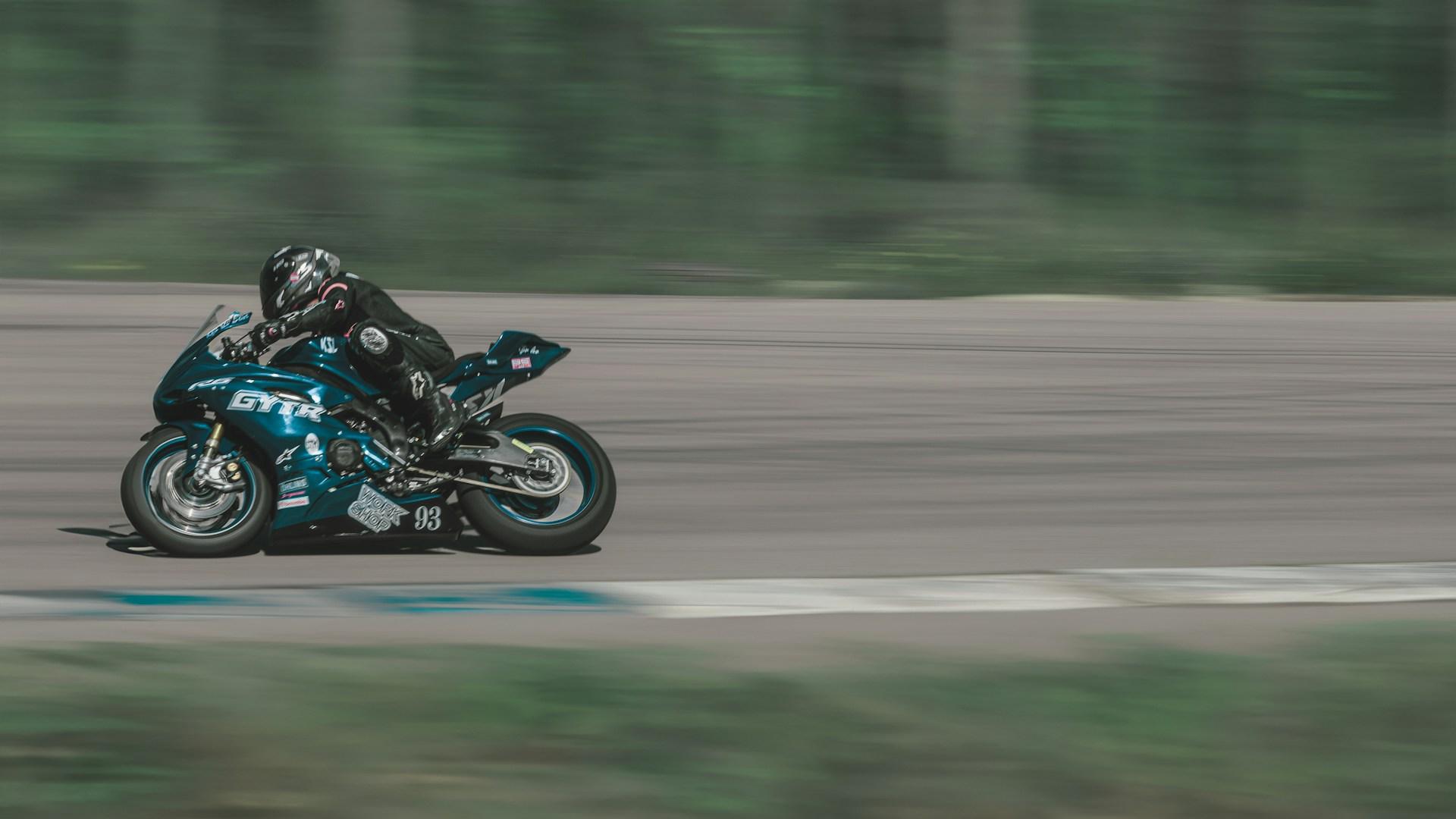
As the bike leans, gravity helps pull the front end downward. Because the steering axis is angled and positioned behind the wheel, gravity actively assists the wheel in turning toward the lean. This effect explains why motorcycles with extreme rake angles can feel “floppy” at low speeds, and why steering dampers exist.
Camber Thrust: The Hidden Force
Motorcycle tires are rounded, not flat like car tires. This shape creates a powerful effect called camber thrust. When upright, the tire contacts the road at its widest radius. When leaned, the contact patch shifts closer to the wheel hub.
Because the outer edge of the tire travels faster than the inner edge during a lean, the tire naturally wants to follow a curved path, just like a cone rolling in a circle. This camber thrust is a major reason motorcycles turn smoothly once leaned.
Why the Bike Doesn’t Keep Falling Over
With all these forces encouraging the bike to lean and turn, why doesn’t the motorcycle just spiral into the ground?
The answer is centrifugal force.
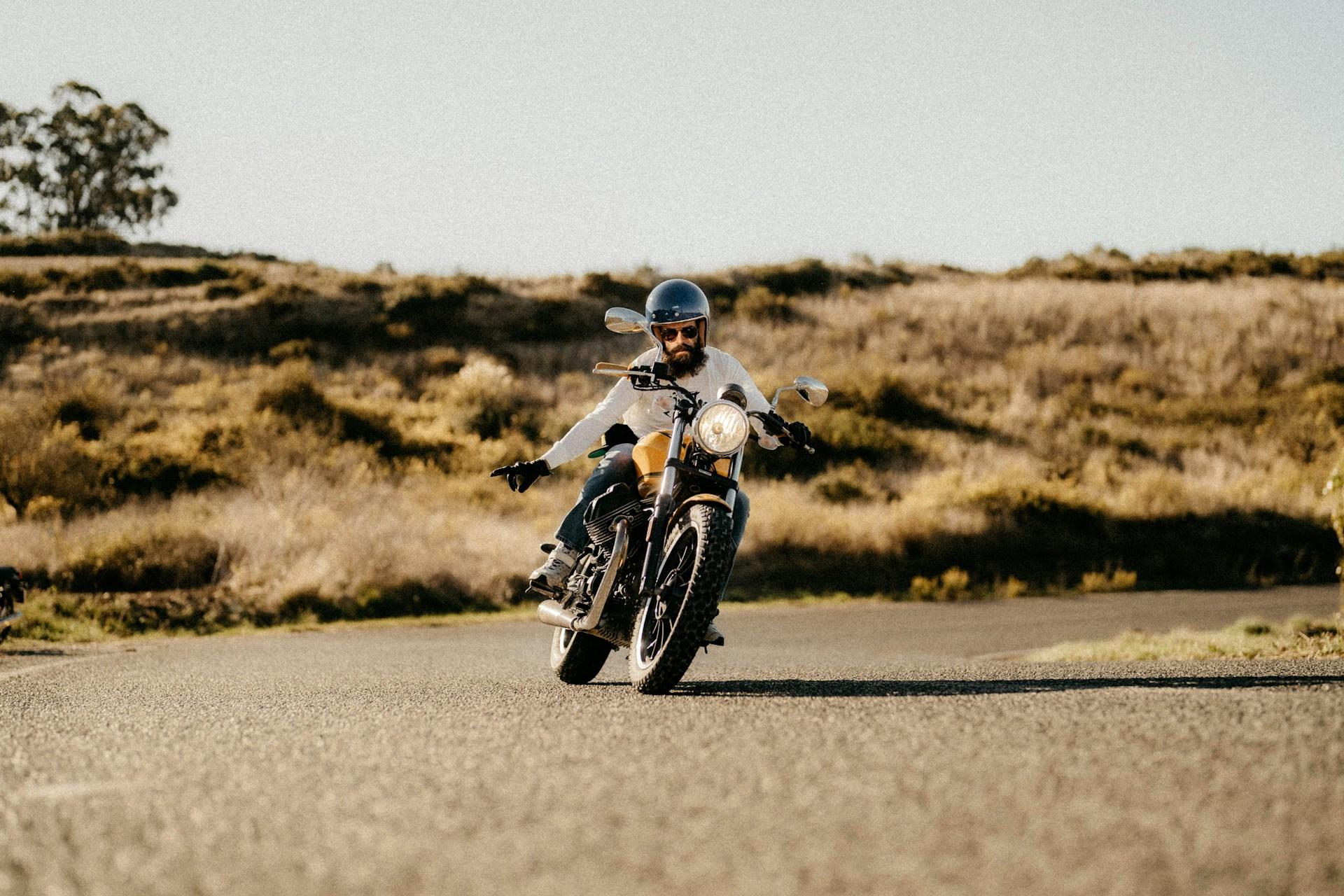
For any given speed and lean angle, there is exactly one natural turning radius where gravity (pulling the bike down) and centrifugal force (pushing it upright) are perfectly balanced.
- Increase speed → bike stands up → turn radius widens
- Decrease speed → bike leans more → turn tightens
This balance is why motorcycles feel stable mid-corner and automatically adjust if speed changes.
How a Motorcycle Self-Corrects
If you let go of the handlebars at speed, the motorcycle will wobble briefly, sometimes dramatically, but then settle into a straight, upright path.
This happens because:
- Steering geometry resists misalignment
- Momentum favors straight-line travel
- Tire traction pushes the wheel back into alignment
When the front tire is not pointing straight, the motorcycle’s forward momentum pushes against the contact patch, forcing the wheel to pivot back toward center. Over time, all forces agree on one solution:
Straight up. Straight ahead. Stable.
The Only Way a Motorcycle Turns at Speed
To be perfectly clear:
Any motorcycle traveling faster than walking speed can only be turned by counter-steering.
Body weight, leaning, or shifting posture may influence the bike, but none of those actions work without counter-steering initiating the lean.
Final Thoughts
Counter-steering isn’t mysterious, dangerous, or optional. It’s a beautifully engineered interaction between physics, geometry, and tire behavior, designed into every motorcycle on the road.
Once you understand it, you ride with:
- More confidence
- Better control
- Smoother, safer cornering
And maybe a little more appreciation for the engineers who made it all work. Pretty clever, right?
Inspired by James R. Davis