
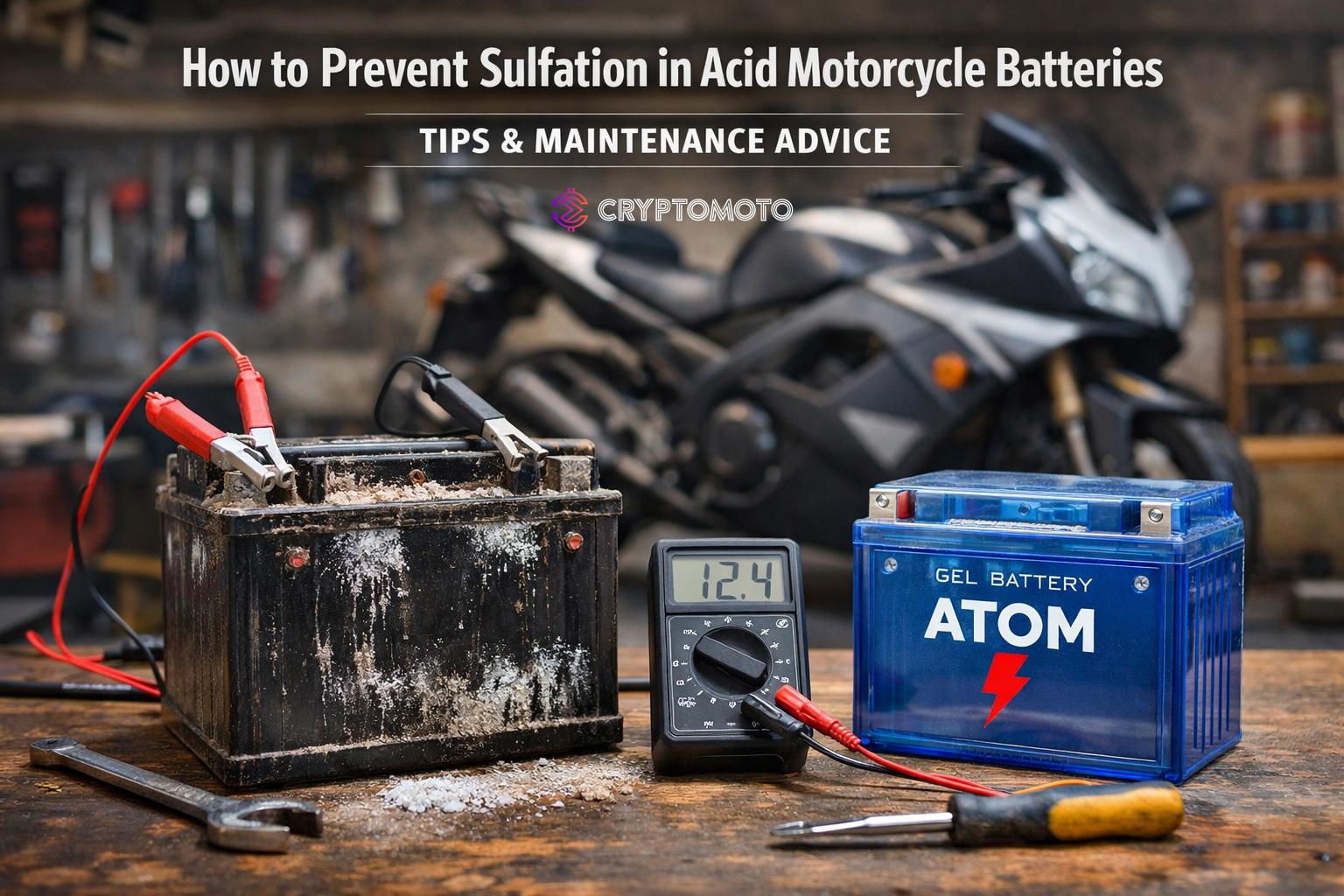

The gel battery offers higher safety because the electrolyte exists in a bound, non-flowing gel state. As a result, the electrolyte (acid) cannot leak.
Twice the Storage Life Without Use
Gel batteries can remain unused for twice as long as conventional batteries. On average, they lose only 1/600 of a volt per day, whereas AGM batteries lose about 1/300. This means riders need to recharge an AGM battery every 3-4 months, while a gel battery requires recharging only once every 6-8 months.
Extended Operating Temperature Range
Gel batteries operate reliably in temperatures from −40 to +65 °C. In contrast, AGM batteries function only within a narrower range of −20 to +45 °C. When temperatures fall outside these limits, the battery loses capacity, and that loss cannot be restored.
Higher Capacity and Resistance to Sulfation
Gel batteries provide higher capacity because the electrolyte does not stratify. As a result, the battery does not undergo sulfation: lead does not form sulfate compounds and uses its entire surface area effectively. In standard acid and AGM batteries, lead sulfate forms on the plates, causing the battery to stop accepting and holding a charge.
All gel batteries should comply with JIS and ISO standards and are manufactured according to the specifications of equivalent Yuasa batteries.
Advice for Users of Acid Batteries
Riders who continue to use acid batteries can still take preventive measures, since sulfation can not only be corrected but also prevented.
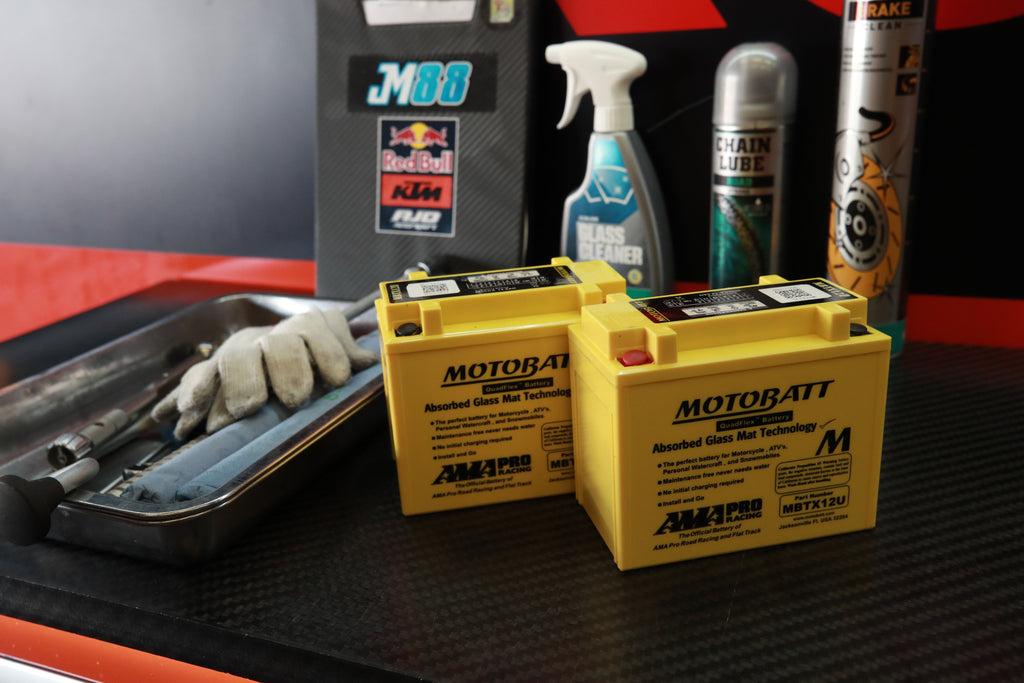
Sulfation progresses gradually:
- internal resistance increases;
- the active surface area of charged electrodes decreases;
- overall battery capacity declines.
Common Causes of Sulfation
The most frequent causes include:
- insufficient charging;
- irregular equalizing charge checks;
- storing the battery partially charged or discharged;
- low electrolyte level;
- high operating temperatures.
Signs That Sulfation Has Started
Brownish, unnatural deposits clearly indicate sulfation. Swollen plates, dirty white spots on the plates, rapid boiling, and reduced capacity all signal that the battery needs immediate attention. You can stop sulfation only at its earliest stage, usually through a single discharge-charge cycle.
Procedure for Eliminating Plate Sulfation
To remove sulfation from the plates, follow these steps carefully:
Step 1: Clean the Battery
Wipe the battery thoroughly.
Step 2: Restore Electrolyte Level
Bring the electrolyte to the proper level by adding water.
Step 3: Charge the Battery
Connect the battery to a charger and set the charging current for an eight-hour cycle.
If the electrolyte temperature exceeds 43 °C during charging, reduce the current to keep the temperature at or below this level.
If the voltage of any cell drops 0.2 volts below the average battery voltage, immediately remove that cell and repair it. Continue desulfation only after completing these corrections.
Step 4: Monitor Density and Voltage
After the battery receives a charge equal to its nominal capacity, continue charging until electrolyte density remains constant across four measurements taken at one-hour intervals. Record voltmeter and hydrometer readings and adjust density values for temperature. These figures indicate the battery’s state of charge.
Step 5: Discharge Test
Discharge the battery using a six-hour discharge current. Measure voltage for each cell and the battery as a whole:
- after 15 minutes from the start of discharge;
- then every hour until one cell reaches approximately 1.8 volts;
- then every 15 minutes.
Closely monitor each cell and record the time when voltage falls below 1.75 volts. End the test when most cells reach 1.75 volts. If any cell shows a reverse reaction, stop the test immediately.
Step 6: Evaluate Capacity
If the discharge capacity equals the nominal value, do not perform further tests. Fully recharge the battery and equalize electrolyte density.
Step 7: Continue Discharge if Needed
If capacity remains below nominal, continue discharging at the same current until one cell reaches 1.0 volt.
Step 8: Recharge Again
Recharge the battery to full capacity and continue charging until electrolyte density stabilizes across four hourly measurements.
Step 9: Repeat the Discharge
Discharge the battery again using a six-hour cycle. If capacity now matches the nominal value, recharge and install the battery.
Step 10: Repeat if Capacity Is Slightly Low
If capacity remains below nominal but above 90%, repeat the entire cycle.
Step 11: Replace if Restoration Fails
If capacity cannot be restored, sulfation has progressed too deeply. At this point, further efforts are ineffective, and replacing the battery becomes the only viable option.
Summary
Sulfation is the main reason acid motorcycle batteries lose capacity and fail prematurely, but careful maintenance can slow or even prevent it. Gel batteries largely eliminate this problem thanks to their stable electrolyte, wider temperature tolerance, and longer storage life. For conventional acid batteries, regular charging, proper electrolyte levels, controlled temperatures, and systematic discharge, charge cycles can help restore performance in the early stages of sulfation. When capacity can no longer be recovered, replacement becomes the only practical solution.