

Quick answer: What are the best crypto exchanges in the UK?
The best crypto exchanges in the UK are eToro, Coinbase, and Kraken. eToro is FCA-registered and ideal for beginners, offering low 1% crypto fees and its unique CopyTrader™ feature. Coinbase provides a secure and easy-to-use platform with staking options and educational tools for new investors. Kraken suits active traders, delivering low fees, advanced trading features, and top-tier security through its Kraken Pro platform.
7 best cryptocurrency exchanges UK ranked
Here’s a quick list of the best crypto exchanges in the UK, ranked from hands-on testing and expert analysis:
- eToro – Best for beginners
- Bitpanda – Best for staking
- Uphold – Best for a large selection of altcoins
- Coinbase – Best for simplicity
- Kraken – Best for low-cost trading
- Revolut – Best if you want your mobile banking & crypto in one place
- CoinJar – Best for seamless crypto spending
Don’t invest unless you’re prepared to lose all the money you invest. This is a high-risk investment, and you should not expect to be protected if something goes wrong.
Best crypto exchange UK compared
Here’s a comparison of the top options, based on four key factors every investor should consider:
| Rank | Exchange | Fees | Deposit fees | Cryptocurrencies available | GBP deposit methods |
|---|---|---|---|---|---|
| 1 | eToro | 1% + market spread | 0.5% | 90+ | Bank transfer, debit card, Neteller, Skrill, eToro Money |
| 2 | Bitpanda | 0.99% – 2.49% premium | Free | 600+ | Bank transfer, credit/debit card, PayPal, Apple Pay |
| 3 | Uphold | 1% trading fee + 1% spread fee | Debit card fee of 3.99% | 250+ | Bank transfer (ACH), debit card, Apple Pay, Google Pay |
| 4 | Coinbase | 1% commission + 0.5% spread fee | Debit card fee of 3.99% | 250+ | Bank transfer, credit card, cryptocurrency, debit card, PayPal |
| 5 | Kraken | From 0.26% | £1 fee on bank transfers | 230+ | Bank transfer, credit card, cryptocurrency, debit card, Apple Pay, Google Pay, SWIFT |
| 6 | Revolut | 1.49% | 2.5% | 80+ | Bank transfer, credit card, cryptocurrency, debit card, Apple Pay, Google Pay, SWIFT |
| 7 | CoinJar | 1% | £0 for bank transfer | 50+ | Bank transfer, credit/debit card, Apple Pay, Google Pay |
Crypto trading platform reviews
Crypto is expanding rapidly in the UK. Around 4.97 million people now hold digital assets, representing nearly 10% of the population. Market revenue is projected to reach US$1.89 billion in 2026, growing at 18.8% annually, and over 500 UK businesses already accept crypto payments.
This guide helps UK investors find the best FCA-regulated crypto exchanges, focusing on:
- Trading and deposit fees
- Number of supported cryptocurrencies
- GBP payment options
- Ease of use and education tools
All listed platforms are FCA-registered and offer secure apps on Android and iOS.
Why trust CryptoMoto?
Our team has hands-on experience in the UK retail investment and crypto sectors. Each platform is tested and verified for safety, usability, and transparency. This article was reviewed by Tobi Opeyemi Amure, a cryptocurrency expert for Investopedia and Investing.com, ensuring accuracy and reliability.
1. eToro – best for beginners
Don’t invest unless you’re prepared to lose all the money you invest. This is a high-risk investment and you should not expect to be protected if something goes wrong.
What is eToro?
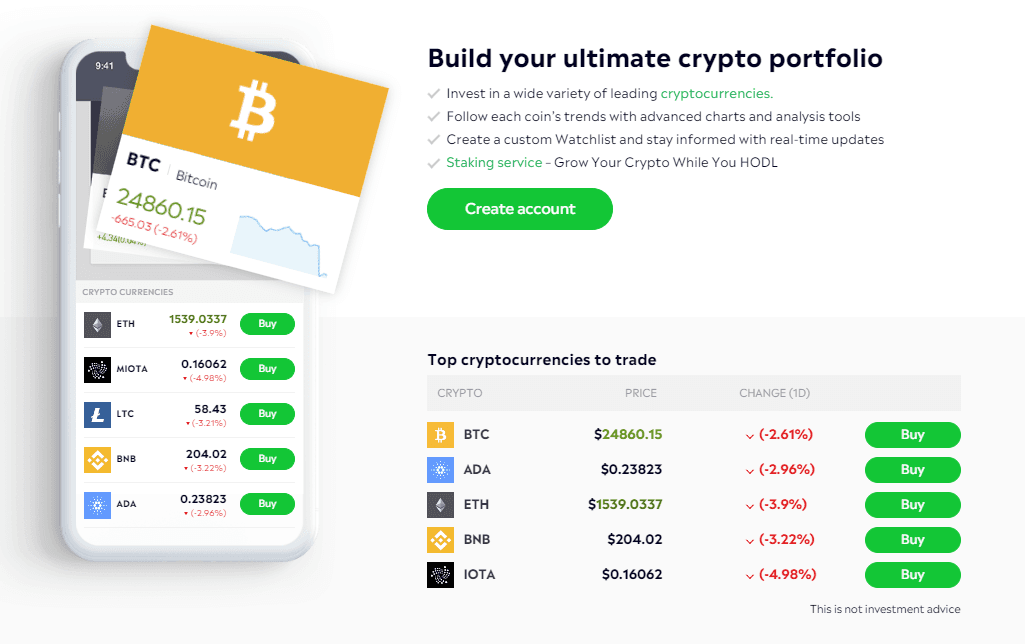
eToro, founded in 2007, is a FCA-registered multi-asset trading platform trusted by over 30 million users worldwide. It’s especially popular with UK beginners for its user-friendly interface and social trading tools. You can trade 90+ cryptocurrencies, including Bitcoin, Ethereum, Solana, and Cardano, as well as stocks, ETFs, and CFDs. With a low $50 minimum deposit and instant GBP payments via debit cards, PayPal, Skrill, and bank transfer, eToro makes crypto investing simple and accessible.
What are eToro’s key features?
eToro’s standout feature is CopyTrader™, which lets you mirror trades from successful investors automatically. Its Smart Portfolios allow diversified, long-term investing across crypto, tech, or ESG themes. Users can also earn up to 5.3% interest on idle balances, trade across multiple asset types from one account, and use an intuitive mobile app rated highly on both Android and iOS.
How much does eToro cost?
eToro charges a flat 1% fee on all crypto trades, added to the market spread. There’s a 0.5% currency conversion fee for GBP deposits (as accounts are held in USD), a $5 withdrawal fee, and a $10 inactivity fee after 12 months. Despite these, eToro remains one of the most transparent low-cost options for UK investors.
How safe is eToro?
eToro is regulated by the Financial Conduct Authority (FCA), offering b investor protection and compliance with UK AML laws. It uses cold storage for most crypto assets, two-factor authentication (2FA) for account security, and provides negative balance protection. The platform has an Excellent Trustpilot rating from over 18,000 reviews, reinforcing its credibility.
Who is eToro best for?
eToro is best for beginners and casual investors who want to start trading crypto safely while learning from others. Its CopyTrader™ and Smart Portfolios make investing accessible, even with little prior experience. However, advanced traders may find eToro’s charting tools and staking options limited compared to specialised crypto exchanges.
eToro key facts
| Criteria | Details |
|---|---|
| Trading fee | 1% (plus market spread) |
| GBP deposit fee | 0.5% conversion fee |
| Available cryptocurrencies | 90+ |
| Minimum deposit | $50 |
| Deposit methods | Bank transfer, debit card, PayPal, Skrill, Neteller |
| Customer support | 24/5 live chat and email |
| Regulation | FCA-registered |
| Interest on balances | Up to 5.3% APY |
What are the pros and cons of using eToro?
| Pros | Cons |
|---|---|
| ✅ FCA-registered and highly trusted | ✅ 0.5% currency conversion fee for GBP deposits |
| ✅ Beginner-friendly and easy to use | ❌ $5 withdrawal and $10 inactivity fee |
| ✅ CopyTrader™ for hands-off investing | ❌ Limited advanced charting and crypto tools |
| ✅ Smart Portfolios for diversified exposure | ❌ No staking or on-chain withdrawals |
| ✅ Earn up to 5.3% interest on idle funds | ❌ Platform operates in USD only |
| ✅ Multi-asset access (crypto, stocks, ETFs, CFDs) | ❌ Customer support limited to 24/5 |
Verdict
eToro delivers one of the best all-around crypto trading experiences in the UK, combining regulation, simplicity, and social investing tools. It’s ideal for newcomers seeking a secure and low-cost entry into crypto trading, while still offering enough flexibility for long-term investors.
2. Bitpanda – best for staking
Don’t invest unless you’re prepared to lose all the money you invest. This is a high-risk investment and you should not expect to be protected if something goes wrong.

What is Bitpanda?
Bitpanda is a FCA-registered crypto platform offering UK users access to 600+ cryptocurrencies, including Bitcoin, Ethereum, and Solana. You can start investing from just £1, trade 24/7, and use limit orders to buy or sell at chosen price points. The platform supports GBP deposits via bank transfer, debit/credit card, PayPal, and Apple Pay, all with no deposit or withdrawal fees.
What are Bitpanda’s main features?
Bitpanda combines automation tools and staking rewards for a flexible investing experience. You can stake 50+ assets with weekly rewards of 2-30% APY, automatically re-staked for compounding. Crypto Indices offer automatic diversification through monthly rebalancing, powered by MarketVector (VanEck). It also provides 1:1 asset backing, ISO 27001-certified security, and a UK-optimised mobile app (4.7 iOS rating).
How much does Bitpanda cost?
Bitpanda uses a transparent spread-based fee model of 0.99-2.49% built into the buy/sell price, rather than flat commissions. There are no deposit or withdrawal fees, and unfilled limit orders can be cancelled anytime. Blockchain network fees apply only when transferring crypto off-platform.
How safe is Bitpanda?
Bitpanda prioritises security and transparency. It’s ISO 27001-certified, uses cold wallet storage, and provides biometric logins and two-factor authentication (2FA). All assets are fully 1:1 backed and independently audited. While the platform uses hot wallets for daily trading, long-term investors may prefer external cold storage for extra security.
Who is Bitpanda best for?
Bitpanda is best for UK investors who want wide crypto access and passive income from staking. It suits beginners and long-term holders who prefer a simple, automated approach with low entry requirements. However, traders seeking advanced charting tools or DeFi integrations may find the platform limited until Bitpanda Fusion becomes available in the UK.
Bitpanda key facts
| Criteria | Details |
|---|---|
| Trading fee | 0.99%–2.49% spread (built into price) |
| Deposit fee | Free |
| Available cryptocurrencies | 600+ |
| Minimum investment | £1 |
| Deposit methods | Bank transfer, debit/credit card, PayPal, Apple Pay |
| Customer support | In-app chat and help centre |
| Staking rewards | 2–30% APY on 50+ coins |
| Regulation | FCA-registered, ISO 27001 certified |
What are the pros and cons of using Bitpanda?
| Pros | Cons |
|---|---|
| ✅ 600+ supported cryptocurrencies | ❌ Bitpanda Fusion (pro trading) not yet in the UK |
| ✅ Weekly staking rewards up to 30% APY | ❌ Fees may be higher for large trades due to spreads |
| ✅ No deposit or withdrawal fees | ❌ No NFT marketplace access |
| ✅ 1:1 asset backing and ISO 27001 certification | ❌ Limited Web3 and DeFi functionality |
| ✅ Easy-to-use, UK-optimised mobile app | ❌ Hot wallet setup not ideal for long-term cold storage |
| ✅ Invest from just £1 with limit order tools | ❌ Staking rewards can vary based on network performance |
Verdict
Bitpanda is a top choice for UK investors seeking variety, automation, and passive rewards. With wide asset selection, staking flexibility, and strong security credentials, it’s ideal for beginners and hands-off investors looking to build a diversified crypto portfolio.
3. Uphold – best for a large selection of altcoins
What is Uphold?
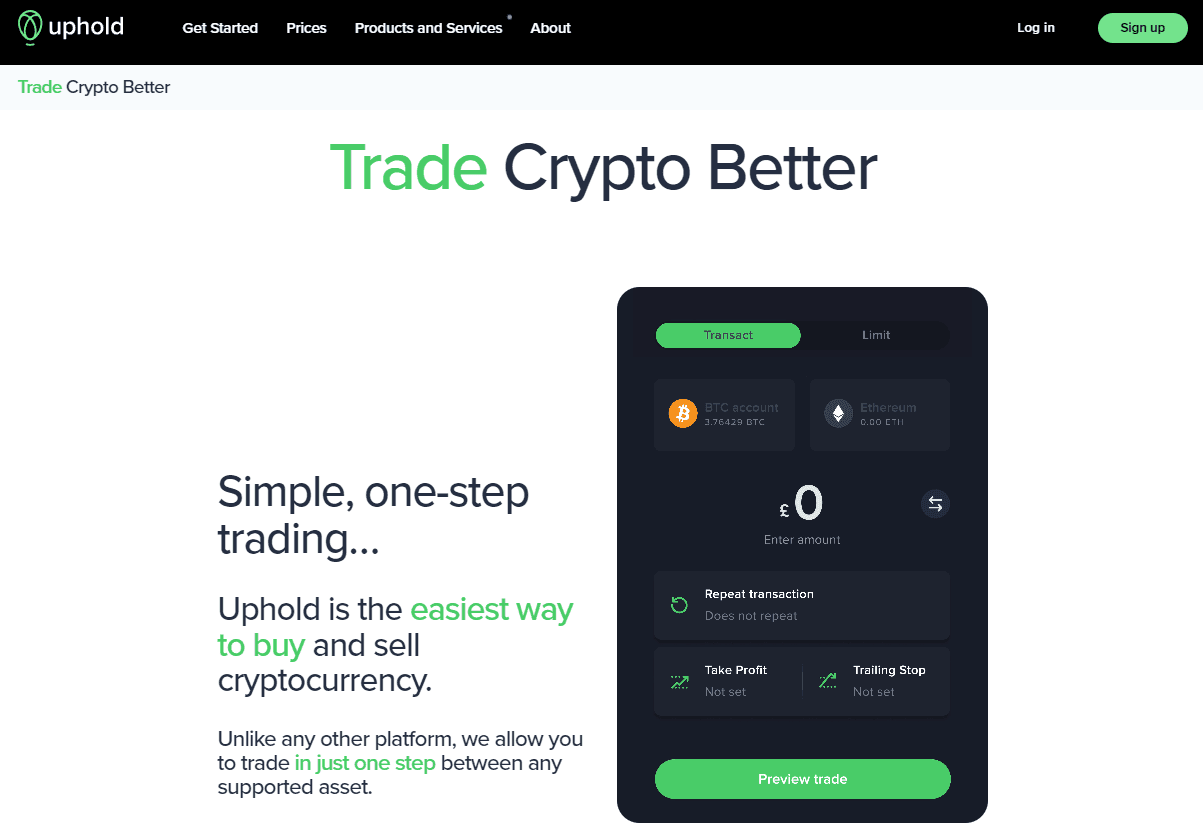
Uphold is a multi-asset FCA-registered platform that allows UK users to trade over 250 cryptocurrencies, including Bitcoin, Ethereum, and Solana, alongside stocks, metals, and fiat currencies. You can deposit GBP via bank transfer, debit card, Apple Pay, or Google Pay, and trade instantly through a sleek web or mobile app.
What are Uphold’s main features?
Uphold’s standout feature is its Anything-to-Anything trading, which lets users instantly convert between any two supported assets without intermediate steps. The platform offers full reserve transparency, publishing real-time proof of assets and liabilities so users can verify solvency at any time. Other useful tools include recurring buy options, an integrated crypto wallet, and a multi-asset dashboard that gives a complete view of your portfolio.
How much does Uphold cost?
Uphold uses a spread-based pricing model, typically 0.8–1.2% for major cryptocurrencies and higher for low-liquidity assets. There are no trading commissions. UK debit card deposits incur a 3.99% fee, while bank transfers are free. Spreads are shown clearly in the order preview, so users always know the cost before trading.
How safe is Uphold?
Uphold maintains a 100% reserve model, meaning all customer funds are fully backed and viewable in real time. The platform undergoes regular third-party security audits and employs two-factor authentication (2FA) for account protection. Transparency is a core part of its design, with users able to monitor liquidity and reserves anytime.
Who is Uphold best for?
Uphold is best for beginners and diversified investors who want to access crypto, stocks, and metals all in one place. It’s ideal for users who value transparency, simplicity, and multi-asset flexibility. However, it lacks staking, lending, and advanced trading tools, making it less suitable for professional or high-frequency traders.
Uphold key facts
| Criteria | Details |
|---|---|
| Trading fees | Spread-based, typically 0.8%–1.2% for major coins |
| Deposit fees | Free for bank transfers, 3.99% for debit cards |
| Available cryptocurrencies | 250+ |
| Minimum deposit | None |
| Deposit methods | Bank transfer, debit card, Apple Pay, Google Pay |
| Customer support | 24/7 live chat and email |
| Regulation | FCA-registered |
| Trading type | Crypto, stocks, metals, and fiat |
What are the pros and cons of using Uphold?
| Pros | Cons |
|---|---|
| ✅ 250+ cryptocurrencies and multi-asset access | ❌ 3.99% fee for debit card deposits |
| ✅ Transparent real-time reserve reporting | ❌ Higher spreads on low-liquidity assets |
| ✅ Anything-to-Anything trading between assets | ❌ No staking or passive income features |
| ✅ Recurring buy options for automated investing | ❌ Limited advanced trading tools or charting |
| ✅ Free GBP bank transfers | ❌ Spread costs can fluctuate during volatility |
| ✅ Undergoes third-party security audits | ❌ Smaller crypto selection than some rivals |
Verdict
Uphold is a trusted and transparent platform that gives UK investors simple access to crypto, metals, and stocks under one roof. With real-time reserve proof and low-friction asset swaps, it’s a top choice for beginners who want flexibility and peace of mind.
4. Coinbase – best for simplicity
What is Coinbase?
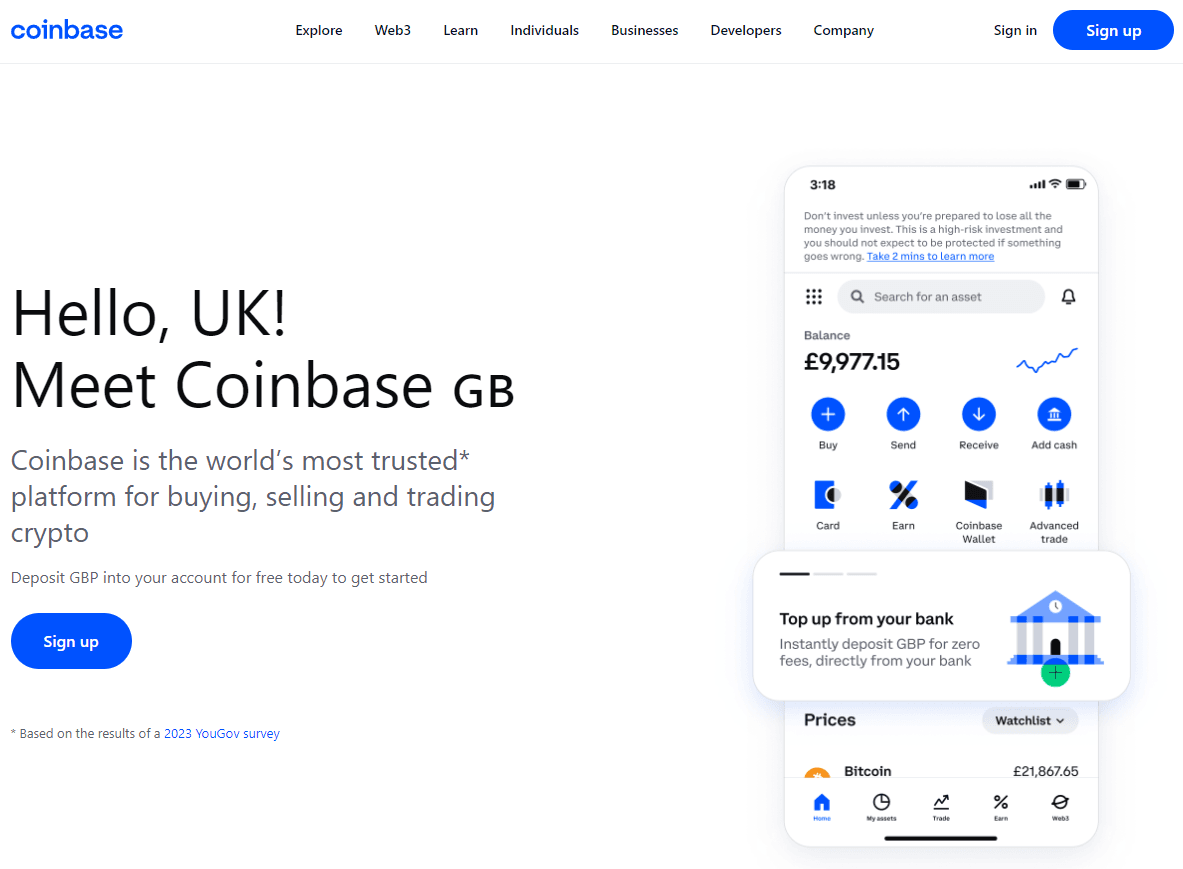
Coinbase, founded in 2012, is one of the world’s most trusted and beginner-friendly crypto exchanges, serving over 70 million verified users in more than 100 countries. The platform supports 250+ cryptocurrencies and offers both a simple interface for beginners and Coinbase Advanced for experienced traders. UK users can deposit via bank transfer, debit card, PayPal, or crypto and access an ecosystem built around security, education, and ease of use.
What are Coinbase’s main features?
Coinbase offers a clean, intuitive interface, ideal for new crypto investors. It includes staking rewards for coins like Ethereum and Cardano, recurring purchases for pound-cost averaging, and educational programs that reward users with free crypto. Coinbase Advanced provides lower fees, live order books, and professional charting for active traders. The Coinbase Wallet app also gives users full control of their private keys.
How much does Coinbase cost?
Coinbase’s fees are higher than many competitors. Standard trades include a 1% commission plus a 0.5% spread, while debit card deposits incur a 3.99% fee. Fees on Coinbase Advanced start at 0.5% (maker-taker model) and reduce with higher trading volume. There’s also a currency conversion fee when buying crypto directly with GBP. Despite this, many users accept the higher cost for Coinbase’s reliability and security.
How safe is Coinbase?
Coinbase is FCA-registered and stores 98% of customer funds in offline cold storage. It enforces two-factor authentication (2FA) and biometric logins for additional protection. Custodial funds are insured, and the platform undergoes regular security audits. Its b reputation and transparent compliance make it one of the most secure exchanges for UK investors.
Who is Coinbase best for?
Coinbase is best for beginners and long-term crypto investors who value simplicity and trust over low fees. It’s a great first step for anyone entering the crypto market, with built-in education, staking, and mobile trading tools. More advanced users can upgrade to Coinbase Advanced for better charting and reduced trading costs.
Coinbase key facts
| Criteria | Details |
|---|---|
| Trading fees | 1% commission + 0.5% spread (standard) |
| Deposit fees | 3.99% for debit card, free for bank transfer |
| Available cryptocurrencies | 250+ |
| Minimum deposit | None |
| Deposit methods | Bank transfer, debit card, PayPal, crypto |
| Customer support | 24/7 live messaging (response times vary) |
| Regulation | FCA-registered |
| Storage | 98% of assets in cold storage |
What are the pros and cons of using Coinbase?
| Pros | Cons |
|---|---|
| ✅ Beginner-friendly and easy to navigate | ❌ High trading and deposit fees |
| ✅ FCA-registered and trusted brand | ❌ Currency conversion fees for GBP |
| ✅ Coinbase Advanced for active traders | ❌ Customer support can be slow |
| ✅ Secure cold storage (98% of funds offline) | ❌ Fewer niche tokens than global rivals |
| ✅ Earn staking rewards on supported coins | ❌ Full features require Coinbase Advanced |
| ✅ Learn & Earn educational program | ❌ Not ideal for professional trading tools |
Verdict
Coinbase remains one of the best crypto exchanges for beginners in the UK, thanks to its security, ease of use, and strong reputation. While fees are higher than some competitors, the platform’s user experience, educational tools, and staking options make it an excellent entry point for new investors.
5. Kraken – best for low-cost trading
What is Kraken?
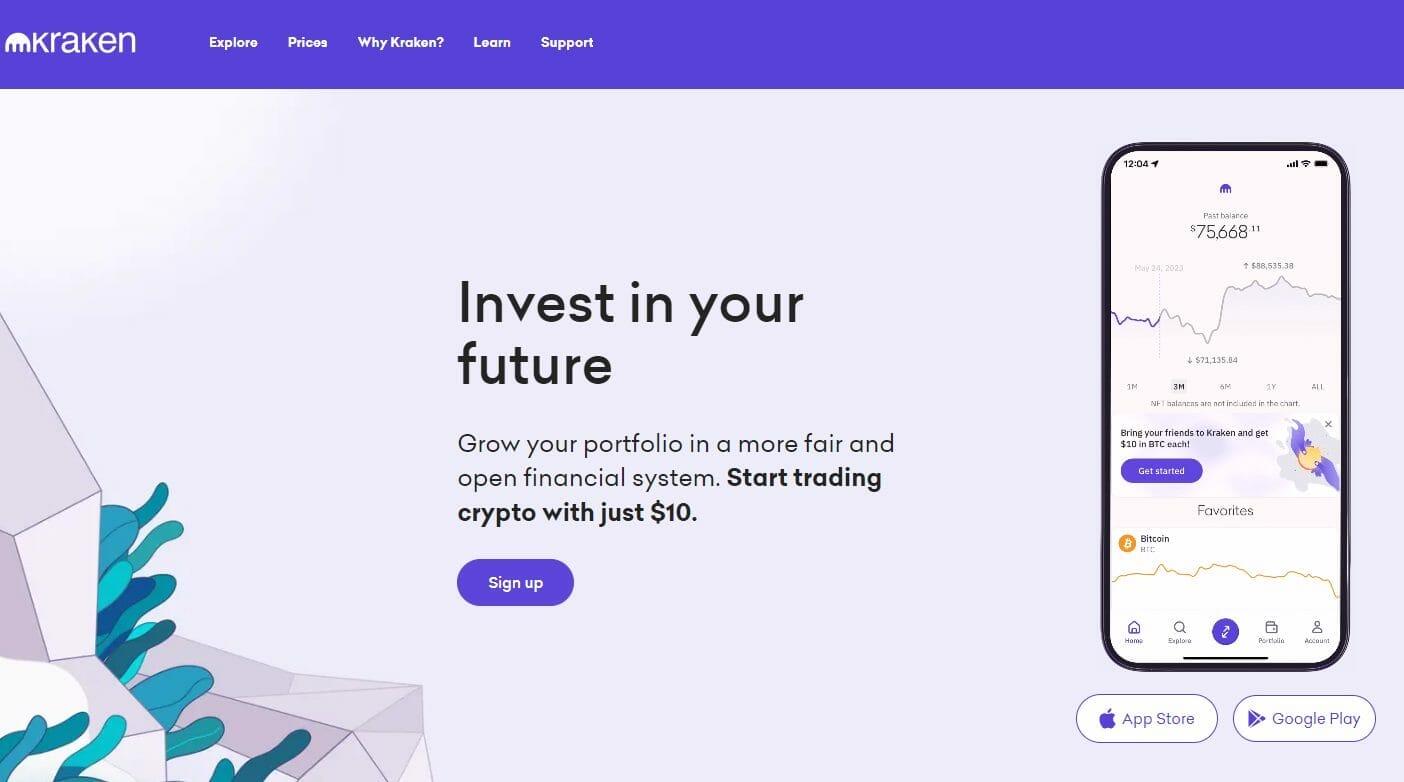
Kraken, founded in 2011, is a FCA-registered cryptoasset firm known for low fees, deep liquidity, and robust security. UK users can trade 230+ cryptocurrencies, with fast GBP funding via Faster Payments, bank transfer, and SWIFT, plus card and wallet options. It suits frequent buyers and active traders who want professional tools.
What are Kraken’s main features?
Kraken offers Kraken Pro with tiered maker-taker fees, customisable charts, advanced order types and deep order books. You can access staking on selected assets like ETH, SOL and DOT, view mobile apps for basic or Pro, and use API access for automation. GBP deposits and withdrawals are quick and reliable.
How much does Kraken cost?
Kraken Standard (Instant Buy/Convert) is about 1% plus spread. Kraken Pro uses a maker-taker model starting near 0.25% maker / 0.40% taker, stepping down with volume. UK card purchases can be ~3.75% + £0.25. Some GBP bank transfers carry a £1 fee. Pro is the cheapest route for active trading.
How safe is Kraken?
Kraken is FCA-registered, runs proof-of-reserves checks, stores most assets in cold wallets, and enforces 2FA and encryption. It has no major customer-fund losses reported over more than a decade. As with all exchanges, FSCS protection does not apply.
Who is Kraken best for?
Kraken is best for active and experienced traders who want low Pro fees, advanced tools, and high liquidity. Beginners can start on the basic interface, but the learning curve is steeper than simpler apps.
Kraken key facts
| Criteria | Details |
|---|---|
| Trading fees | Standard ~1% + spread, Pro from ~0.25% maker / 0.40% taker |
| Deposit fees | Bank transfer from £1; cards ~3.75% + £0.25 |
| Cryptocurrencies | 230+ |
| GBP methods | Faster Payments, bank transfer, SWIFT, cards, Apple Pay, Google Pay |
| Staking | On selected assets, yields vary by coin and location |
| Apps | Kraken (basic) and Kraken Pro |
| Support | 24/7 live chat and phone |
| Regulation | FCA-registered for cryptoasset activities |
What are the pros and cons of using Kraken?
| Pros | Cons |
|---|---|
| ✅ Low fees on Kraken Pro | ❌ Higher costs if using Instant Buy or cards |
| ✅ Advanced tools and order types | ❌ Steeper learning curve for beginners |
| ✅ Deep liquidity and fast GBP funding | ❌ Some features unavailable to UK retail (e.g., certain futures) |
| ✅ Strong security and proof-of-reserves | ❌ No FSCS protection |
| ✅ Staking on selected assets | ❌ Recurring GBP buys limited |
Verdict
Kraken delivers a professional-grade trading experience with competitive Pro fees, security, and liquidity. It is a top pick for serious UK traders who value cost control and advanced tools, and acceptable for beginners willing to learn.
Types of cryptocurrency exchanges
There are three types of crypto exchanges as follows:
- Centralised exchanges
- Decentralised exchanges
- Hybrid/non-custodial exchanges
Centralised exchanges
These are run by companies that act as intermediaries. They manage user accounts, hold funds, and handle trades. They offer high liquidity, user-friendly interfaces, and fiat support, but require users to trust the platform with their assets.
Examples: Coinbase, Binance, Kraken
✅ Fast trades and high liquidity
✅ Easy to use, even on mobile
✅ Support for fiat deposits and withdrawals
✅ Often regulated with customer support
⚠️ You don’t control your private keys
⚠️ Funds are at risk if the exchange is hacked
⚠️ Accounts can be frozen or limited
⚠️ Usually requires full ID verification (KYC)
Decentralised exchanges
DEXs enable users to trade directly with each other using smart contracts, without handing over custody of their funds. They offer more privacy and control, but may have lower liquidity and be more difficult to use.
Examples: Uniswap, PancakeSwap, SushiSwap
✅ You control your own funds (no custody)
✅ No account needed or KYC required
✅ More privacy and censorship resistance
✅ Reduced risk of exchange hacks
⚠️ Lower liquidity for some tokens
⚠️ No fiat support (crypto-to-crypto only)
⚠️ More complex for beginners
⚠️ No customer support if something goes wrong
Hybrid/non-custodial exchanges
DEXs let users trade directly with each other using smart contracts without handing over custody of their funds. They offer more privacy and control but can have lower liquidity and be harder to use.
Examples: Uniswap, PancakeSwap, SushiSwap
✅ You control your own funds (no custody)
✅ No account needed or KYC required
✅ More privacy and censorship resistance
✅ Reduced risk of exchange hacks
⚠️ Lower liquidity for some tokens
⚠️ No fiat support (crypto-to-crypto only)
⚠️ More complex for beginners
⚠️ No customer support if something goes wrong
Here’s a comparison table of the three types of cryptocurrency exchanges:
| Feature | Centralised (CEX) | Decentralised (DEX) | Hybrid / Non-Custodial |
|---|---|---|---|
| Examples | Coinbase, Binance, Kraken | Uniswap, PancakeSwap, SushiSwap | dYdX, Loopring, KuCoin (non-custodial) |
| Custody of Funds | Exchange holds your funds | You hold your funds | You hold your funds |
| Ease of Use | Very beginner-friendly | Less user-friendly | Moderate |
| Liquidity | High | Varies (can be low) | Moderate to high |
| Fiat Support | Yes | No | Sometimes |
| Privacy | Requires KYC (ID verification) | No KYC | Sometimes KYC-free |
| Security Risk | Vulnerable to hacks or freezes | Safer from exchange hacks | Reduced custody risk |
| Speed of Trades | Very fast | Can be slower | Fast |
| Customer Support | Usually available | None | Sometimes available |
| Control Over Private Keys | No | Yes | Yes |
When choosing a UK crypto exchange, consider your experience level, security preferences, and trading needs. If you’re new or want easy access to fiat, a centralised exchange is the most user-friendly. For more privacy and full control over your funds, decentralised platforms are a better fit. Hybrid exchanges offer a middle ground with added flexibility but may require more technical know-how. Always check fees, supported assets, and reputation before signing up.
How to choose the right crypto exchange
Here are the key factors to consider when choosing the best UK crypto exchange for you:
FCA registration & regulation
Start with FCA-approved crypto exchanges, which are platforms registered with the Financial Conduct Authority (FCA) or compliant with UK crypto rules.
Not all crypto exchanges are fully regulated. However, look for firms on the FCA’s crypto asset register to ensure basic legal oversight and consumer protections.
GBP support & local payment methods
Choose an exchange that supports deposits and withdrawals in GBP. Look for fast and low-cost options like Faster Payments, bank transfers, or even PayPal. Avoid platforms that only support USD or require costly currency conversion.
Security standards
Stick to exchanges with strong security measures, including two-factor authentication (2FA), cold wallet storage, and transparent incident response policies. UK-focused platforms that publish proof-of-reserves or undergo audits offer extra peace of mind.
User experience & interface
If you’re a beginner, a clean, intuitive layout matters. Check if the exchange has a simple dashboard, fast onboarding, and mobile app access. Advanced traders might want features like detailed charting tools, order types, and APIs. Try demo accounts or tutorials if available.
Asset coins
Make sure the exchange lists the cryptocurrencies you’re interested in, from Bitcoin and Ethereum to newer altcoins. Some UK platforms stick to major assets, while others offer hundreds of trading pairs.
Fees & pricing transparency
Compare maker/taker fees, deposit and withdrawal fees, and hidden charges. UK investors should also be mindful of platforms that charge for GBP deposits or convert GBP to USD behind the scenes.
Payment methods & fiat support
If you’re buying crypto with cash, make sure the exchange supports your local currency and payment method. Common options include bank transfers, debit/credit cards, PayPal, or Google Pay. Watch for fees and processing times, some methods can take days, others are instant but cost more.
Liquidity & volume
Top-tier exchanges have strong liquidity, meaning your trades go through quickly with less slippage. Check independent reviews, Trustpilot ratings, and Reddit feedback for how UK users rate the platform.
Customer support
Choose a platform with responsive support, ideally with UK hours and localised help docs. Live chat is a plus. Avoid exchanges with no direct contact or long response times.
Custodial vs non-custodial options
Decide if you’re happy with the exchange holding your crypto or if you want full control. Some UK users prefer to buy on a custodial platform like Coinbase and transfer to a private wallet for extra security.
Extra features
Some exchanges offer staking, savings accounts, or tax reports tailored to UK regulations. These tools can simplify long-term investing or managing gains under HMRC rules.
How crypto is taxed & regulated in the UK
Trading or holding crypto in the UK comes with financial responsibilities. From FCA oversight to HMRC rules, it’s important to understand how the law applies to you. Here’s a breakdown of what to keep in mind:
Is crypto regulated in the UK?
Yes, but only in limited areas. The Financial Conduct Authority (FCA) regulates crypto firms for anti-money laundering and consumer transparency. However, crypto isn’t legally recognised as currency or covered by financial protections like the FSCS. If an exchange fails or funds are lost, there’s usually no compensation.
Do UK investors pay tax on crypto?
Yes. HMRC treats crypto as property, not currency. If you sell, trade, or gift crypto, it may trigger Capital Gains Tax (CGT). You’ll need to report any gains above the annual allowance and pay tax accordingly.
Is income tax ever applied to crypto?
Yes, when you receive crypto as a reward or payment.
This includes:
- Mining rewards
- Staking income
- Airdrops (in some cases)
- Crypto received for services or freelance work
These are taxed as income based on the crypto’s GBP value at the time you receive it.
What counts as a taxable event?
In HMRC’s view, these are all taxable events:
- Selling crypto for fiat (e.g., GBP)
- Swapping one crypto for another
- Using crypto to buy goods or services
- Gifting crypto (unless to a spouse or civil partner)
Even if you don’t “cash out,” these actions can create tax liabilities.
CGT example for the 2025-26 tax year
Let’s say you bought £2,000 of Ethereum and later sold it for £8,000. That’s a £6,000 gain.
- The annual CGT allowance is £3,000, so only the remaining £3,000 is taxable.
- If you’re a basic rate taxpayer, you’ll pay 10%, which equals £300.
- If you’re a higher-rate taxpayer, you’ll pay 20%, or £600.
Tracking your gains carefully is key to avoiding underpayment or penalties.
How to stay compliant with HMRC
Keep clear records of every crypto transaction, including:
- Date and time
- Type of transaction (buy/sell/swap)
- GBP value at the time
- Crypto wallet addresses (if relevant)
You should store records for at least 5 years and report your gains or income in your Self-Assessment tax return. Use crypto tax tools like Koinly, CoinTracker, or Accointing to save time and avoid errors.
Quick tips for UK crypto tax compliance
✅ Record every transaction in GBP
✅ Track cost basis and sale prices
✅ Don’t ignore small trades; they add up
✅ File Self Assessment if gains exceed £3,000
✅ Use HMRC-recognised crypto tax tools
How to use a cryptocurrency exchange: simple step-by-step guide
- Choose a Trusted Exchange: Pick a platform that’s FCA-registered and supports GBP. Good beginner options include Coinbase, eToro, and CoinJar.
- Create an Account: Sign up with your email and create a strong password. Most platforms will ask you to verify your identity (KYC) with a photo ID and address proof.
- Deposit Funds: Link your bank account or card to add GBP to your account. Bank transfers are usually cheaper than card payments.
- Buy Cryptocurrency: Once your funds arrive, choose the cryptocurrency you want (like Bitcoin or Ethereum) and enter how much you want to buy. Review the trading fees, then confirm the purchase.
- Store Your Crypto: You can keep it in the exchange’s wallet or move it to your own wallet for more control. Hardware wallets are best for long-term storage.
- Sell or Withdraw: To sell, go back to the trading section and swap your crypto for GBP. You can then withdraw the cash to your bank account.
- Keep Records: Save receipts and transaction history. You may need them for tax purposes when reporting gains to HMRC.
What are the best crypto brokers in the UK?
The best crypto brokers in the UK in 2026 are eToro, Kraken, Coinbase, Gemini, Uphold, and Bitpanda. These platforms are known for strong security, FCA-verified registrations where applicable, low fees, and user-friendly apps. All platforms below support GBP deposits and allow UK customers to buy and sell major cryptocurrencies.
UK crypto brokers compared
| Broker | Best for | Asset range | Trading fees | Min deposit |
|---|---|---|---|---|
| eToro | Beginners and multi-asset investing | 80 plus coins | 1 percent crypto fee | £50 |
| Kraken | Low-fee active trading | 200 plus coins | 0.16–0.26 percent | £10 |
| Coinbase | Ease of use | 250 plus coins | 1 percent plus spread | £2 |
| Gemini | High security | 110 plus coins | 0.20–0.40 percent | £0 |
| Uphold | Altcoins and transparency | 250 plus assets | Spread based | £0 |
| Bitpanda | Savings plans and automation | 350 plus assets | Spread based | £10 |
How are crypto exchanges changing in 2026 in the UK
Crypto exchanges in the UK are entering a new era, shaped by shifting regulations, market trends, and evolving user expectations.
Recent statistics & trends
In 2026, the UK’s crypto landscape is witnessing significant shifts. Recent data indicates that public awareness of cryptocurrencies has increased, with 93% of the UK public now familiar with crypto, up from 91% after the Bitcoin halving event in April 2024. Additionally, approximately 12% of British adults have invested in some form of cryptocurrency. The UK cryptocurrency market is projected to grow, with revenue expected to reach £3 billion by 2028.
CryptoMoto insights
One unique aspect of the UK’s crypto exchange evolution is the emphasis on regulatory compliance. The Financial Conduct Authority (FCA) is playing a pivotal role in shaping the regulatory landscape, with a focus on consumer protection, transparency, and market integrity. This shift towards stricter regulations is likely to enhance trust and stability in the market, making the UK an attractive hub for crypto trading.
Moreover, the integration of stablecoins into the broader regulatory framework suggests a move towards more mainstream acceptance of cryptocurrencies as commodities.
Our predictions
Looking ahead, several trends are likely to shape the future of crypto exchanges in the UK:
- Regulatory Clarity: The upcoming regulatory roadmap will likely introduce clearer guidelines for crypto exchanges, focusing on transparency, risk disclosure, and market abuse prevention. This could lead to increased confidence among investors and more robust market infrastructure.
- Stablecoin Normalisation: As stablecoins become more integrated into the regulatory framework, they may become more normalised as commodities, potentially leading to increased adoption and use in everyday transactions.
- Technological Advancements: With advancements in blockchain technology and the rise of decentralised finance (DeFi), UK crypto exchanges may need to adapt by offering more sophisticated trading tools and services to remain competitive.
Overall, 2026 is poised to be a transformative year for crypto exchanges in the UK, marked by regulatory evolution, technological innovation, and growing mainstream acceptance.
Final thoughts
The best crypto exchanges in the UK combine regulation, low fees, and ease of use. Platforms like eToro and Coinbase are ideal for beginners thanks to their simple interfaces and strong FCA oversight. Bitpanda and Uphold appeal to investors seeking wide asset access and passive income options, while Kraken stands out for advanced traders who value low fees and professional tools.
Ultimately, the right exchange depends on your goals, whether you want to buy your first Bitcoin, build a diversified crypto portfolio, or trade actively. Always check FCA registration, understand each platform’s fees, and never invest more than you can afford to lose.
FAQs
Sources:
- https://www.fca.org.uk/publication/research-notes/cryptoasset-consumer-research-2025-wave-6.pdf
- https://www.statista.com/outlook/fmo/digital-assets/cryptocurrencies/worldwide?currency=USD
- https://www.globallegalinsights.com/practice-areas/blockchain-cryptocurrency-laws-and-regulations/united-kingdom/